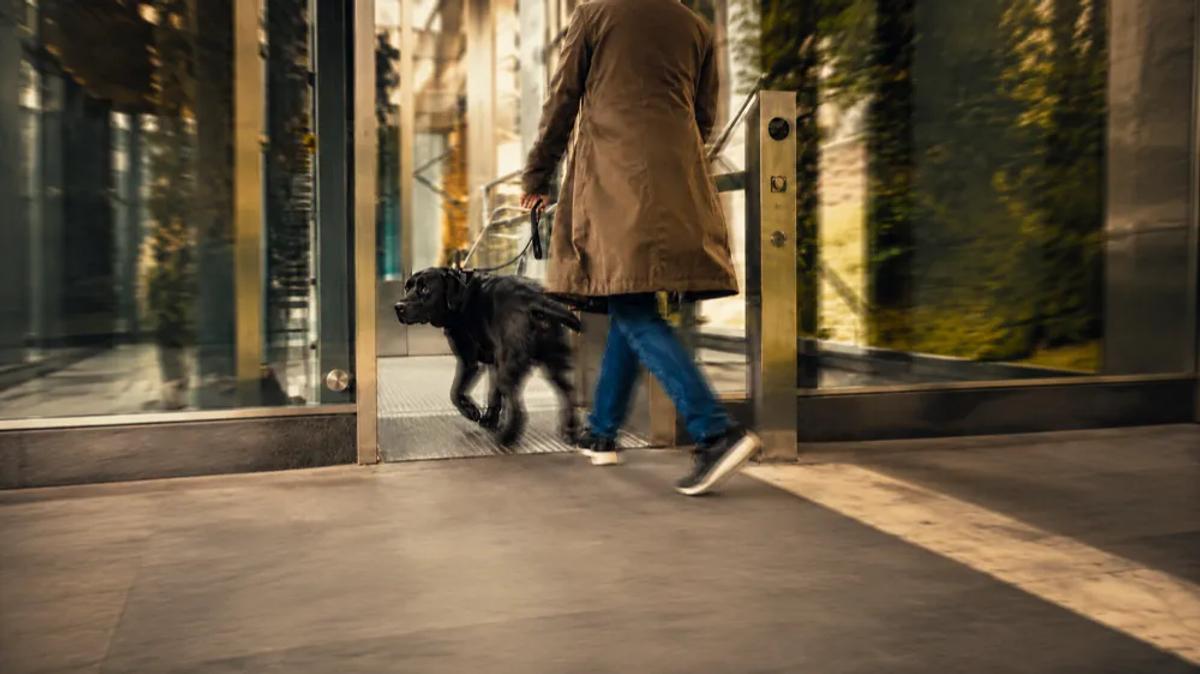
No. A housing society cannot bar your dog from using the lift, and it cannot charge you a special fee for taking your pet in it. The Animal Welfare Board of India said so directly in its 2015 guidelines, and Indian courts have treated the denial of lift access to pet parents as a failure of service the society is answerable for. The "no pets in the lift" sign is one of the most common society rules going, yet it rarely survives contact with the actual law. Here is what the law actually allows.
What the AWBI says
The Animal Welfare Board of India's guidelines of 26 February 2015 handle the lift question in a single line that leaves no ambiguity. Residents' welfare associations and apartment owners' associations cannot disallow pets from the use of lifts, and no charges can be imposed by them either.
Read that carefully, because it closes two doors at once. Your dog cannot be kept out of the lift, and the lift cannot be turned into a source of pet income through a special fee. This sits inside the Board's broader position that a society cannot levy special charges on pet parents for keeping a pet, however the charge is dressed up, whether as a lift fee, a maintenance surcharge, or a penalty.
What the courts have held
The guidelines are backed by the courts. In 2021, in People for Animals v. State of Kerala, the Kerala High Court held that bye-law clauses preventing residents from accessing lifts and common facilities with their pets are illegal, unconstitutional and unenforceable, as part of its wider ruling that a society cannot prohibit residents from keeping pets. A residents' association provides shared facilities to residents in return for maintenance charges, and shutting a paying resident out of the lift with no lawful basis runs against both that ruling and the AWBI guidelines.
The one reasonable request a society can make
There is a single, narrow area where the guidelines ask pet parents to cooperate, and it is worth knowing so you can tell a fair request from an unlawful one. Where a building has more than one working lift, the AWBI guidelines advise pet owners not to object to using an alternate lift, if one is conveniently accessible.
The distinction matters. Being asked to take the second of two working lifts sits within the spirit of the guidelines, and going along with it is an easy courtesy. It becomes a different matter when a rule shuts your dog out of the lifts altogether or attaches a fee to the one it does allow, and there you are under no obligation to comply.
The concerns behind the sign, and how to meet them
Most lift restrictions grow out of a real worry rather than plain hostility. Usually it is hygiene, or a nervousness among some residents about sharing a small metal box with a large dog. Addressing the genuine version of the concern takes the heat out of the argument and keeps you on solid ground. Keeping your dog leashed and close to you in the lift covers most of it. If someone who is visibly nervous is already inside, waiting for the next car costs you nothing and earns a good deal of goodwill, and keeping your dog off the floor of the car where you can does no harm either. None of this concedes the unlawful demand. It is the same balance the courts have drawn, where you hold your right of access and exercise it considerately. A dog that is itself anxious in the lift is worth helping too, with short, calm, rewarded trips rather than force, though that is a training matter and not a legal one.
If they have already put up a "no pets in the lift" sign
Plenty of societies have. The guidelines themselves say these boards and signposts should not be there, and the Kerala High Court directed associations to take them down. You are not obliged to treat such a sign as binding, though a shouting match in the lift lobby helps nobody.
The better route is a calm, written note to the committee that cites the 2015 AWBI guidelines and the position that lift access cannot be denied or charged for. If the sign stays up and the pressure continues, you have moved into harassment territory, and the guide on responding to a society pet notice sets out how to escalate, from a written reply through to a complaint to the Animal Welfare Board or a consumer forum. The full picture of what a society can and cannot do sits in the pillar guide on pet rights in housing societies.
Frequently asked questions
Can a society charge a pet fee for using the lift?
No. The AWBI guidelines state that no charges can be imposed for pets using the lift. A society cannot attach a special fee to your pet for a shared facility.
Can they insist my dog only uses one specific lift?
Only as a courtesy, and only where more than one lift is genuinely available and convenient. The guidelines ask owners not to object to using an alternate lift in that situation. A society cannot stretch this into cornering you with an inaccessible option or effectively denying you lift access.
Is a "stairs only for pets" rule legal in a high-rise?
No. The AWBI guidelines rule out disallowing pets from lifts, and the Kerala High Court has held that denying pets access to lifts and common facilities is unenforceable in law. A stairs-only rule is a denial of access wearing the costume of a condition.
The bottom line
Your dog can use the lift, and it costs nothing extra. A society may ask you to use an alternate lift where one is genuinely available, and that request is fair enough. Anything past it, a ban, a fee, a stairs-only rule, runs against both the AWBI guidelines and the courts, and a short written reference to the 2015 guidelines usually settles it.
Sources
- Guidelines with respect to Pet & Street Dogs, and for Residents' Welfare Associations and Apartment Owners' Associations (26 February 2015) — Animal Welfare Board of India, Government of India.
- People for Animals v. State of Kerala, WP(C) 13603 of 2021, judgment dated 2 November 2021 — High Court of Kerala, retrievable from the eCourts judgment portal (judgments.ecourts.gov.in).