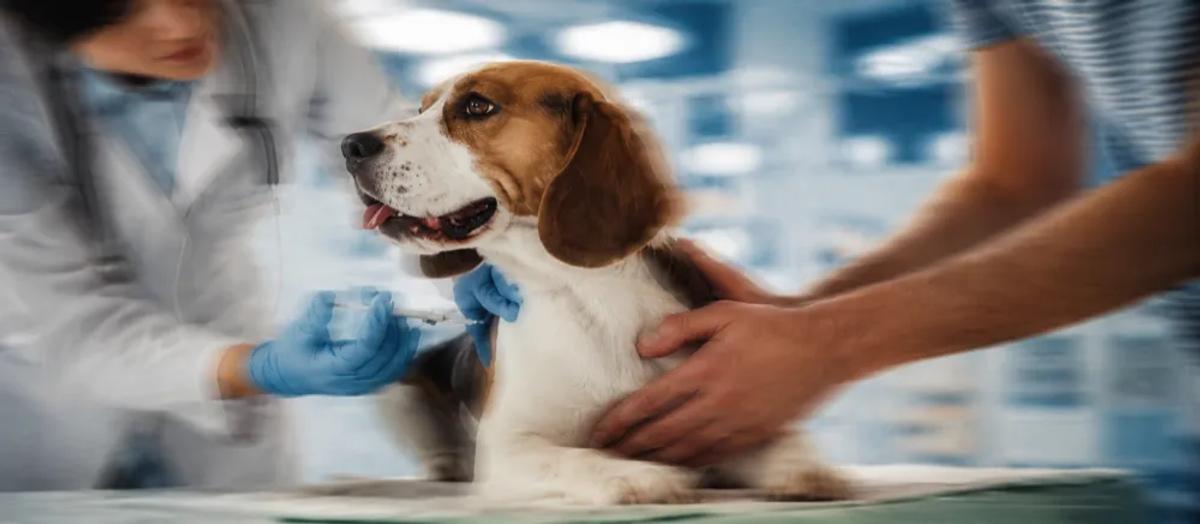
A 7-in-1 or 9-in-1 is a combination vaccine: a single injection that bundles several vaccines together. It carries the core shots your dog needs, distemper, hepatitis and parvovirus, along with non-core add-ons like parainfluenza and leptospirosis, and the exact mix changes by brand. A higher number does not automatically mean a better shot. Here is what each actually contains, and how to read the entry on your dog's card.
What is actually inside
The letters on a combination vaccine tell you more than the number does. Most are built on a base called DHPP or DHPPi:
- D for distemper
- H for hepatitis (canine adenovirus)
- P for parvovirus
- Pi for parainfluenza
- Add leptospirosis, written as L, and you get DHPPiL, which vets often label a 7-in-1 because leptospirosis vaccines usually cover two serovars. Raise the serovar count or add canine coronavirus, and the same base gets sold as an 8-in-1 or 9-in-1. The counting is not standardised across brands, so two "9-in-1" vaccines from different makers may not contain the same things.
One point that surprises people: rabies is not in any of these combinations. It is always given as its own separate injection, which is why your dog's card shows a rabies entry apart from the DHPPiL one.
What each disease in the shot actually is
The letters are easier to trust once you know what sits behind them.
Distemper (D) attacks a dog's airways, gut and nervous system, and can leave survivors with lasting damage. Hepatitis (H), from a canine adenovirus, goes after the liver. Parvovirus (P) causes severe, often bloody, vomiting and diarrhoea, and is a frequent killer of unvaccinated puppies in India. Parainfluenza (Pi) is one of the bugs behind kennel cough, the hacking cough that spreads fast wherever dogs mix. Leptospirosis (L) is a bacterial disease carried in contaminated water and animal urine, which is why it earns a place in Indian schedules through the monsoon.
The core three, distemper, hepatitis and parvovirus, are the reason the combination shot exists at all. The others ride along because it is easier to give them in one needle than in several separate visits.
Which parts are core, and which are not
Mapped against the WSAVA guidelines, a combination shot mixes both types in one needle.
- Core: distemper, hepatitis and parvovirus. Every dog needs these.
- Non-core: parainfluenza, leptospirosis and coronavirus where present. These are the situational ones, useful for some dogs and not others.
So the "in-1" number is really a count of how many core and non-core components got packed together. It says nothing about whether those extra components are ones your dog needs. The guide on core versus non-core vaccines explains how to judge that.
Does "more-in-1" mean better?
No, and this is the part worth slowing down on, because a 9-in-1 often gets sold as the premium choice.
The WSAVA guidelines list canine coronavirus among the vaccines not recommended for pet dogs, since the evidence does not support routine use. A 9-in-1 that reaches its number partly by adding coronavirus is not giving your dog more real protection than a well-chosen 7-in-1. The question to ask is whether your dog needs what is in the shot, not how high the number climbs. A dog that boards has a real use for the parainfluenza and kennel-cough cover. In a flood-prone area, it is the leptospirosis that earns its place. The number on the label is marketing shorthand, nothing more.
What to check on your dog's card
When your vet records a shot, look past the "9-in-1" label and note the detail:
- The components, usually as those letters, so you know what your dog actually received.
- The date given and the next-due date.
- That rabies is recorded separately, with its own date, since it is never inside the combination.
Reading the card this way means you can answer a boarding facility or a new vet precisely, instead of guessing what "the yearly shot" covered.
Frequently asked questions
What is the difference between 7-in-1 and 9-in-1 for dogs?
Both share the same DHPPi base of distemper, hepatitis, parvovirus and parainfluenza. The higher-numbered ones add more leptospirosis serovars or canine coronavirus on top. The counting varies by brand, so the number alone does not tell you the exact contents.
Does the 9-in-1 vaccine include rabies?
No. Rabies is always a separate injection. A 7-in-1 or 9-in-1 covers the DHPPiL-type diseases, and your dog's rabies shot is recorded on its own.
Is 9-in-1 better than 7-in-1?
Not automatically. A bigger number can simply mean an added component, like coronavirus, that the WSAVA guidelines do not recommend. What matters is whether your dog needs the components, which is a question for your vet.
How often is the combination vaccine given?
Puppies get it as a series, and adults get a booster whose interval depends on the component. Your vet sets the schedule, and the pillar guide on dog vaccination has the full picture.
Is a DHPPiL the same as a 7-in-1?
Broadly, yes. DHPPiL spells out the components (distemper, hepatitis, parvovirus, parainfluenza and leptospirosis), and vets often label that same combination a 7-in-1. Because brands count differently, go by the letters rather than the number.
Do adult dogs still need the combination shot?
Yes, usually as a booster given yearly or less often depending on the components. The core parts can last longer between boosters, while a part like leptospirosis needs refreshing more often. Your vet sets the interval based on what your dog actually needs.
The bottom line
A 7-in-1 or 9-in-1 is a convenient bundle, not a ranking. What tells you whether it suits your dog is the string of letters behind the number, plus the reminder that rabies is never among them. So when you record a shot, save the actual components to your dog's PetLife profile rather than only the "in-1" label, and the next vet or boarder will know exactly what your dog has had.
Sources
- WSAVA 2024 Guidelines for the Vaccination of Dogs and Cats — World Small Animal Veterinary Association (global veterinary authority).