Dog mating does not confirm pregnancy. A female dog's receptivity, ovulation, fertilisation and pregnancy are separate events, and a vet may need the reproductive history, an examination and appropriate tests to assess what has happened. If a mating was unintended, contact your vet to discuss assessment rather than trying to calculate a personal pregnancy probability from the event alone.
The date you observed can still be useful. It belongs in the history, alongside any heat signs you noticed. Be clear about whether mating was seen or only suspected; keeping that distinction intact gives the clinic an accurate account to work with.
Mating and the heat cycle
Heat usually refers to proestrus and estrus, the first two stages of the female reproductive cycle. During proestrus, a dog may attract males while she is not yet receptive to mating. Bloody discharge and swelling of the vulva can occur at this stage. Attraction does not mean that she has reached the receptive part of the cycle.
Estrus is the stage when receptivity develops. Estrogen is declining and progesterone is increasing around this period. Discharge may become straw-coloured, but its appearance varies. A visible colour change cannot identify one universally correct day in the reproductive sequence.
Dogs ovulate spontaneously. Mating is not needed to trigger ovulation, so the presence or absence of an observed mating does not answer the question of when an egg was released. These are separate pieces of reproductive history.
The stages of the heat cycle explain the changes in greater detail. The practical point here is that a stage description gives context, while an assessment of ovulation requires veterinary interpretation. Neither discharge nor receptivity provides a complete fertility assessment on its own.
What happens before fertilisation
After ovulation, a dog's eggs still need to mature in the oviduct. Fertilisation takes place there, and early embryos later move into the uterus. That sequence involves several events after an egg is released; it does not all happen at the instant dogs mate.
Sperm also have their own part in the timing. They undergo maturation in the male reproductive system and, after ejaculation, may survive for several days in the female tract. Sperm survival can overlap with the period in which eggs complete maturation.
This explains why an observed mating date need not be the date of fertilisation. It also explains why counting forward from that date cannot give a perfectly precise expected birth date. The biology creates a possible interval, rather than a single moment that can be identified from an outside observation.
Our overview of dog reproduction connects these processes with the wider cycle and pregnancy. For an individual dog, however, the existence of sperm and egg processes does not establish that a pregnancy developed. Confirmation remains a separate clinical question.
After an unintended mating
Contact the vet with the observed or suspected mating date and the heat history you know. Describe what you actually saw, including any uncertainty. A clear account is more useful than choosing an exact date because an online calendar appears to require one.
The consultation can distinguish assessment of the cycle from assessment of pregnancy. Physical findings, hormone testing and vaginal cytology may help a vet understand the cycle. Vaginal cytology examines cells from the vagina, but it should not be used alone to time ovulation.
A pregnancy-related decision should follow the veterinary assessment. Mating itself is not confirmation, and a general statement about conception cannot establish the outcome for your dog. The purpose of the consultation is to determine what can be known and what care follows from it.
Keep a short record of the discussion, including the planned assessment and any follow-up the clinic gives you. If different family members speak to the practice, share the same observed history rather than turning a suspected event into a confirmed one as the story is repeated.
How pregnancy is assessed
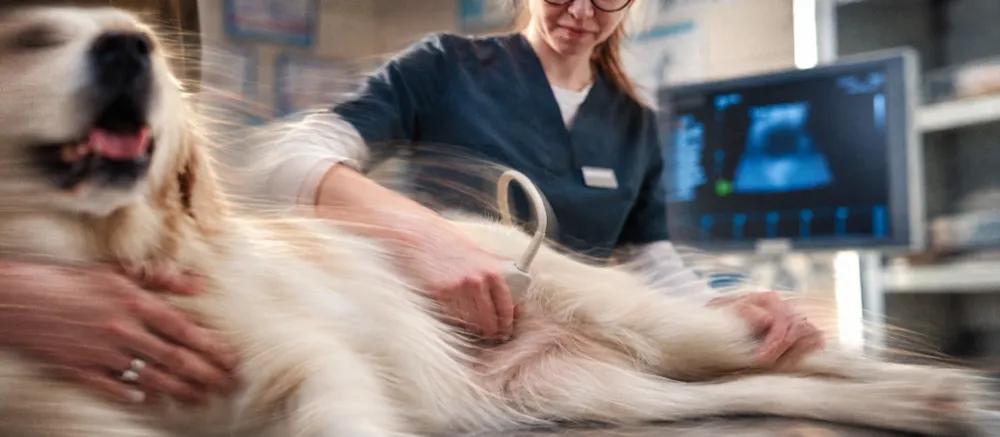
Veterinary pregnancy assessment may involve examination, ultrasound, a blood test for relaxin or radiographs later in pregnancy. The suitable method depends on the stage. The methods are not interchangeable simply because they all appear under the heading of pregnancy assessment.
Ultrasound can be used to examine the developing pregnancy. Later radiographs can help assess the litter, while a relaxin test addresses a hormone associated with pregnancy. Your vet decides which method fits the question and the stage, and explains what the result establishes. This is different from interpreting a cycle hormone result as proof of pregnancy.
Progesterone rises during diestrus even in dogs that are not pregnant. A statement that progesterone has increased therefore needs its reproductive context. Cycle assessment and pregnancy confirmation may be related parts of care, but they answer different questions.
If pregnancy is confirmed, pregnancy timing and birth preparation become the next topics to discuss. Pregnancy averages about 63 days from ovulation, while a mating date gives a less precise estimate. Veterinary interpretation and ultrasound measurements can help assess gestational stage when the history does not establish ovulation timing.
Ask which date anchors any estimate you are given. A date based on observed mating carries different information from an estimate informed by ovulation assessment or ultrasound. Keeping that distinction in the record prevents a broad average from becoming an apparently exact deadline.
Preventing another unplanned pregnancy
Once the current situation has been assessed, discuss future pregnancy prevention. Removing a female dog's ovaries prevents ovarian cycling and pregnancy. The named operation and its timing belong in an individual veterinary discussion, especially when there is a current reproductive question to resolve.
The guide to spaying a female dog explains the female procedure and care discussion. Male gonadectomy is another sterilisation option; neutering a male dog covers that operation separately. Advice about one sex's procedure does not describe the other's anatomy or care plan.
Keep the resulting visit details with the rest of the pet health record. Nuzzy PetLife supports vet-visit history, so you can retain the care discussion for later reference without relying on memory or scattered family messages.
Questions about mating and pregnancy
Does mating confirm that a dog is pregnant?
No, mating does not confirm pregnancy. A vet assesses the history and chooses an appropriate method of pregnancy assessment for the stage. Do not treat a mating observation or a cycle hormone result as a confirmed pregnancy.
How does mating timing relate to the heat cycle?
Female dogs are receptive during estrus, but receptivity alone does not precisely identify ovulation. Dogs ovulate spontaneously, and their eggs still need to mature afterwards. Sperm may survive for several days, so mating and fertilisation need not happen on the same date.
Sources
Cornell Riney Canine Health Center. Dog estrous cycles (2023).
Cornell Riney Canine Health Center. The normal whelping process.
Davidson AP. Management of Reproduction in Dogs. MSD Veterinary Manual (updated June 2026).