
Cat spaying removes a female cat's ovaries, sometimes together with uterine tissue. Removing the ovaries prevents pregnancy and the hormonal heat cycle. The vet should explain the exact procedure and assess the cat before planning surgery.
If the terms are unfamiliar, our guide to spaying and neutering explained sets out the differences. Knowing what is being removed makes the consent and recovery conversations easier to follow.
What cat spaying changes
A spay can involve removal of the ovaries alone, called ovariectomy, or removal of the ovaries with uterine tissue. Ovariohysterectomy is the term for removal of ovaries and uterus. The general word spay does not identify every detail of the planned operation, so ask the clinic which procedure it proposes for your cat.
The ovaries are the important distinction when discussing hormonal effects. Removing them prevents the heat cycle associated with ovarian hormones and prevents pregnancy. That explains why ovary removal matters even when the uterus is not being removed as part of the procedure.
The ovaries and uterus are different organs. Before consenting, ask the vet to explain which will be removed. You don’t need to know the surgical technique to understand that distinction.
The operation is different from neutering a male cat, which involves removal of the testicles. If you have cats of both sexes, keep their care plans distinct. A description of a male cat's procedure does not explain the female cat's abdominal surgery.
Retain the exact operation name in the medical record. It provides more information than a broad label such as sterilized and gives a future vet a clearer starting point when reviewing her care history.
Timing and reproductive benefits
Discuss spaying during early veterinary visits. Clinical guidance describes gonadectomy at 3 to 4 months as an option for cats who are in good health and vaccinated. Those conditions need to stay attached to the age range. Reaching a particular age does not, on its own, establish that every cat is ready for surgery.
Ask the vet how the guidance applies to your cat's current circumstances. If she is already older than a kitten age range you have read, the conversation should focus on her present health and individual assessment. A general age recommendation is not a substitute for the surgical care plan.
Preventing pregnancy is one reproductive benefit of spaying. Gonadectomy before puberty is also associated with a reduction in mammary-tumour risk. This is a meaningful benefit to discuss without turning it into a promise that every future cancer risk disappears.
A protective association means lower risk. Disease can still develop afterwards. Claims of near-total protection online can obscure that distinction and leave pet parents expecting more than the evidence supports.
Discuss timing and benefits together. Ask how the vet is accounting for your cat’s health and readiness for surgery, as well as the reproductive benefits you’ve been reading about.
The surgical care plan
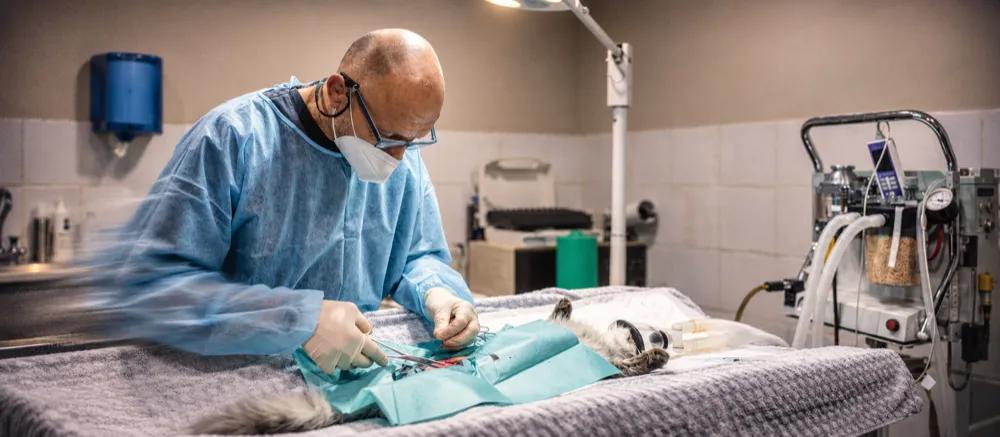
The vet examines your cat before the procedure and plans care for her individual needs. General anaesthesia is used for surgery, and pain medication is part of the plan. Anaesthesia and surgery carry risks, so the clinic should explain the approach without promising that the operation is risk-free.
Pain management begins before surgery, continues during it and extends into recovery. Ask how the clinic handles the period after discharge and what directions will accompany any prescribed treatment. An operation being familiar to the team does not make postoperative pain care an optional part of it.
Preparation instructions should come from the clinic before the appointment. If a direction is unclear, ask for clarification while there is time to understand it. A general article cannot determine the preparation protocol for an individual cat or replace the instructions associated with her assessment.
A useful consent discussion leaves you knowing what is proposed and how the team is planning for your cat. It can acknowledge risk while still explaining why the clinician considers the plan appropriate.
Recovery at home
After female-cat abdominal surgery, quiet recovery and close supervision are important parts of home care. Follow the clinic's instructions for your cat and ask what they mean for her usual routine. The plan should be clear enough for the person caring for her to follow without guessing.
Another cat's recovery story cannot set the timetable for yours. Before discharge, clarify the follow-up arrangements and how the clinic wants questions raised. Use that individual plan rather than treating a fixed number of days from an online account as a guarantee of recovery.
Do not give an over-the-counter pain medicine without veterinary approval. Keep pain treatment within the prescribed plan, and ask the clinic if you do not understand a direction. Choosing an extra medicine independently is not a way to resolve uncertainty about the instructions.
If several people will be at home with your cat, keep the written directions in one place they can all use. Decide who is following the plan during each part of the day and how you will hand over. This avoids different family members making separate assumptions about what a quiet recovery involves.
Keep the clinic’s home-care directions with the operation record. You can refer to the exact instruction if you need to contact the team with a question after discharge.
Weight after spaying
Spayed cats have an increased risk of becoming overweight. Gonad removal can be followed by increased appetite and reduced metabolic rate and energy expenditure. These changes explain why nutrition and body condition deserve a place in the longer-term care discussion.
A cat appearing more interested in food does not by itself establish that she needs a larger allowance. Appetite and energy use can change in different directions. Ask the vet how her feeding and activity plan should be reviewed for her individual circumstances, rather than applying a rule intended for every spayed cat.
Weight gain isn’t inevitable. An individual feeding plan and body-condition review help you address the risk. Avoid a fixed percentage reduction or a new diet chosen solely because another cat received that advice after surgery.
Our guide to planning your cat's daily food amount explains portions, calorie information and the review of body condition. It is useful when the discussion moves from the operation itself to how her regular feeding plan will be managed.
Nuzzy PetLife supports weight logs and vet-visit history. Keep dated measurements for the next veterinary review, alongside the information about what she has been eating. A simple record is enough to give that conversation a clearer starting point.
Questions about cat spaying
What does spaying a female cat involve?
Spaying removes the ovaries, sometimes with uterine tissue. Ovary removal prevents pregnancy and the hormonal heat cycle. Ask which procedure the vet proposes so the description matches your cat's operation.
What should I discuss about recovery after cat spaying?
Ask how to provide a quiet, supervised recovery and how prescribed pain care continues at home. Clarify the clinic's follow-up arrangements and contact instructions before discharge. Follow that individual plan without assuming every cat has the same recovery deadline.
Sources
WSAVA (2024). Guidelines for the Control of Reproduction in Dogs and Cats: Executive Summary.
Cornell Feline Health Center, Spaying and Neutering