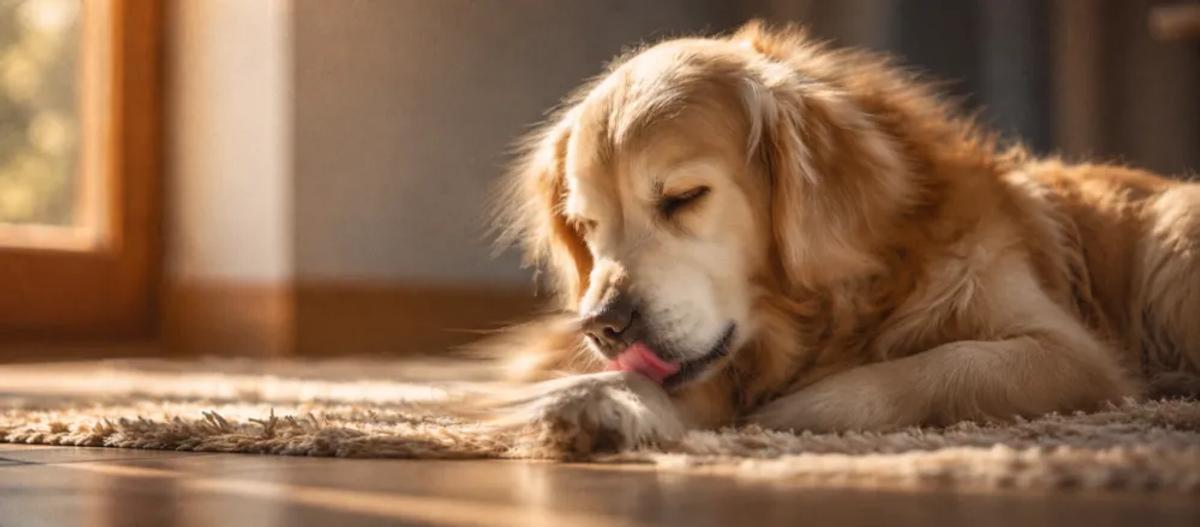
Repeated paw licking can accompany itchy or inflamed skin, and there may be more than one cause. Allergies, foreign material and injury are among the possibilities a vet may investigate. Red skin or stained fur does not establish the cause.
If your dog keeps licking or the skin is becoming damaged, arrange a veterinary assessment. Tell the vet whether one paw or several are affected, and describe the changes you have noticed. Choosing a treatment from a photograph can miss the problem that needs attention.
What repeated paw licking can mean
Dogs with itchy skin may lick and chew their feet. Inflammation affecting the skin of the paws is called pododermatitis, a term that describes the affected area rather than giving a single explanation for it.
Several conditions can produce overlapping signs. A dog may also have more than one factor contributing to the problem, which is why the same treatment does not suit every red or uncomfortable paw.
Red skin and stained hair are different
Look at what has changed, without forcing an inspection if your dog is uncomfortable. Is the skin itself red, or is it mainly the hair around the paw that looks discoloured?
In dogs with atopic dermatitis, licking and scratching can leave the skin red. Hair in the area may become brown through staining from saliva. These are different observations even when they appear together.
Brown hair does not identify yeast, and red skin does not prove a food allergy. Bring the distinction to the appointment rather than treating either colour as an answer.
If you have noticed changes elsewhere on your dog, mention those too. The paw should be considered as part of the dog's overall history, not only as a close-up image.

Why there can be more than one cause
Allergic skin disease is one possible cause of paw inflammation. Foreign material and trauma are other possibilities.
Environmental allergies and food-related problems are not the same thing. A dog licking its feet does not automatically need a new food, and it does not automatically have an environmental allergy either.
There can also be complications alongside the original problem. Inflammation and secondary infection can overlap, while changes in the paw can contribute to a recurring condition. Treatment needs to account for what is present in that dog.
Avoid treating a list of possible causes as a shopping list of remedies. The useful question for the appointment is which explanation the findings support and whether more than one problem needs attention.
What the vet may examine
Your vet will ask about the history and examine your dog. Depending on what they find, they may use tests such as skin scrapings or samples examined under a microscope to help assess the cause.
One paw versus several is useful information, but it is not a reliable home rule for deciding the diagnosis. Tell the vet which paws are involved and whether that has changed.
Prepare the details you know:
- Say when you first noticed the licking and whether it has persisted.
- Describe the skin and hair changes separately.
- Mention other areas your dog is licking, chewing or scratching.
- List treatments or diet changes you have already tried.
That last point matters even when a product seemed to help briefly. Give the clinic its name and explain what changed while you were using it. You don't have to defend having tried something; the vet needs an accurate history.
The assessment may include checking for parasites and other conditions that can resemble allergic skin disease. If fleas are part of the discussion, our guide to fleas on dogs explains that separate problem. It should not be assumed to explain the paw licking before assessment.
Why treatment depends on the findings
Care is tailored to the dog's situation. A plan may need to address the underlying cause and any additional problems affecting the paws, and it may change over time.
Ask the vet what each part of the plan is meant to address.
A recurring problem also deserves follow-up. The factors involved may have changed, or more than one may still need attention. A temporary improvement does not necessarily explain why the licking returns.
Keep the follow-up discussion specific: what improved, what continued, and what has changed since the last assessment. Agree with the clinic on when to get back in touch instead of repeatedly choosing a new remedy on your own.
Frequently asked questions
Does paw licking always mean a food allergy?
No. Paw inflammation can have several possible causes, including different forms of allergy, foreign material and trauma. A vet needs to assess the pattern and findings. Paw licking alone does not establish that a food change is the appropriate treatment.
Why is the fur around the paws brown or red?
Hair where a dog repeatedly licks may develop brown saliva staining, while the skin itself can become red with irritation. Describe which part has changed. Colour alone cannot establish an infection or allergy.
Why does the problem keep coming back?
Paw problems can involve an underlying cause and other factors that maintain the inflammation. The treatment needs may also change over time. Return to your vet with a clear account of the response so the plan can be reviewed for your dog.