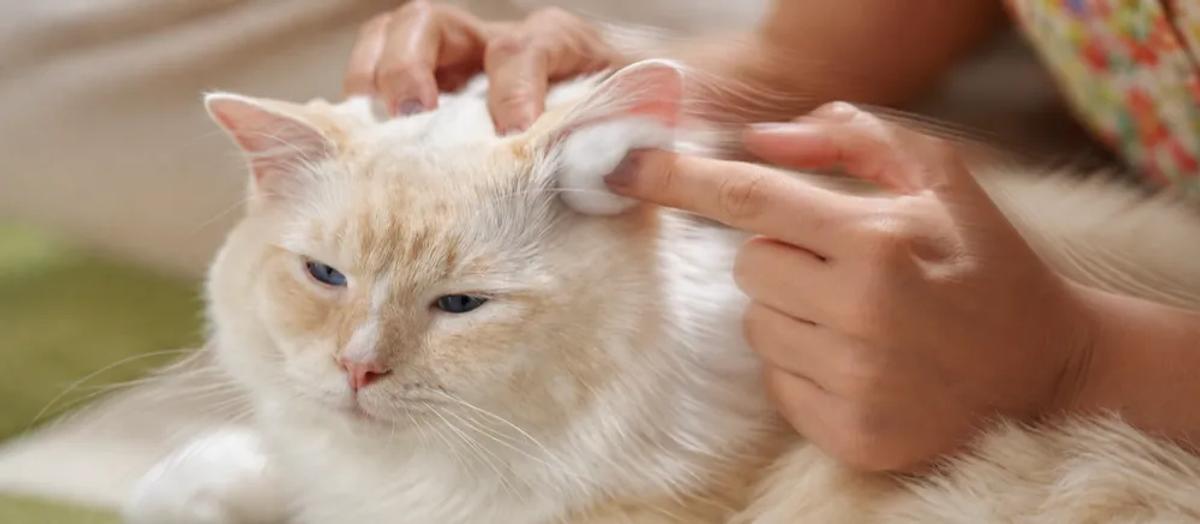
Ask your vet whether your cat needs ear cleaning and which product and frequency apply. Following that advice, a cotton ball may be used to wipe discharge from the visible inner side of the ear flap. Keep cotton swabs out of the ear canal.
Redness, discharge, odour, head shaking or ear scratching are reasons to seek veterinary assessment. Speak to your vet about these changes before attempting cleaning.
Ask whether cleaning is needed
Check with your vet which ear product to use and how often to use it. Excessive cleaning can damage the ear.
Tell the clinic what you've noticed and which instructions you already have. If there is a product at home, give its name without assuming it is suitable.
Prepare for gentle handling
Begin grooming-related handling while your cat is relaxed. Build tolerance gradually and keep each session within the cat’s comfort.
Freezing, tail swishing or growling can signal discomfort. Stop when those signs appear, and allow the cat to leave if the experience is stressful. Do not hold the cat in place to complete a task they are struggling to tolerate.
For the wider handling guidance, read about grooming your cat. When you need help understanding the response you see, reading your cat’s body language explains how posture and surroundings fit together.
Wipe only the visible ear flap
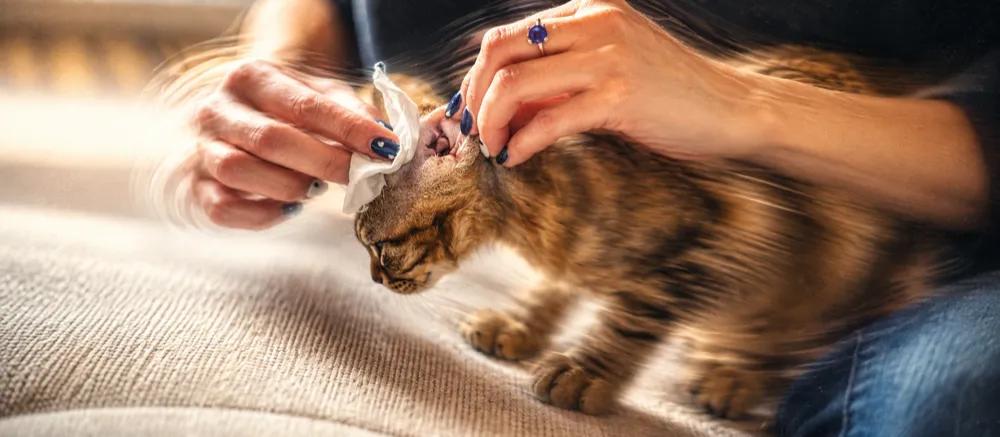
Following veterinary advice, use a cotton ball to wipe discharge from the visible inner side of the ear flap, keeping the wiping to the area you can see.
Deep placement of a cotton swab can damage the eardrum or push debris farther into the ear. Keep swabs out of the canal.
Ask your vet to point out the flap when they demonstrate. If you aren't sure where wiping should stop, get that clarified before attempting it.
Follow your vet’s instructions for any product use. If you are unsure where a product goes, contact the clinic before using it so they can clarify the directions for your cat.
Get advice about concerning changes
Seek veterinary assessment for redness, discharge, odour, head shaking or ear scratching. You do not need to identify the cause before asking for an appointment.
Describe what you saw, when you noticed it and any cleaning you have already done. Have the product name available if you used one.
If handling is stressful, do not force another examination at home to get a more detailed description. Tell the clinic what you were able to observe.
Questions about cleaning cat ears
How often should I clean my cat’s ears?
Ask your vet how often your cat needs ear cleaning and which product to use. Excessive cleaning can damage the ear. Follow the individual advice rather than adding a weekly or monthly routine from a general guide.
Arrange individual guidance
Ask your vet whether cleaning is needed and to show you what to do. Use Nuzzy PetMap to look for vet clinics if you need one. Explain whether you are seeking help with a new change or clarification of an existing care instruction.
Sources
Grooming your cat, International Cat Care
Examining and medicating a cat’s ears, WSU Veterinary Teaching Hospital