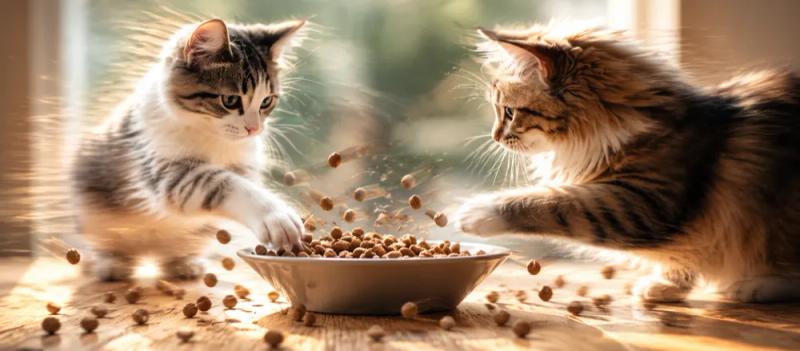
Read cat body language by looking at posture together with what is happening around the cat. Soft muscles and a relaxed position can suggest comfort. A tense crouch, flattened ears or hissing calls for a different response: give the cat space and avoid pushing the interaction. A tail or an ear position by itself cannot explain the whole encounter.
Watch what happens next, too. A cat may walk away when another approaches, or stop at a doorway the other cat is occupying. Repeated patterns help you describe what is happening at home.
Read the whole cat
Look first at the body as a whole. A relaxed cat may have soft muscle tone, forward-facing ears and extended legs. These details are most useful together. The same ear position in a tense cat staring at another cat needs to be read in that different context.
A cat crouched low with a tense body, ears held flat or turned back, may be fearful or distressed. Hissing is self-protective. Respect the signal and stop pressing for contact. You do not need to make the cat tolerate another stroke or a closer approach to confirm what you have seen.
Notice the surroundings. If one cat stands in the route to a resting place and the other turns away, the blocked route belongs in your account of the interaction. Look for whether it happens repeatedly and whether the cats interact differently elsewhere.
Use a description that someone else could recognise: where the cats were, which one moved and what happened next. A short label such as “angry” leaves out that sequence. Observing over time gives you more to discuss if you need help understanding the relationship.
Watch the ears and tail
Forward ears can occur alongside soft muscles in a relaxed cat. They can also occur in a cat staring at another during a tense encounter. Read the muscle tension and the interaction before deciding that the cat is comfortable.
Ears held flat, rotated sideways or turned back can accompany arousal or distress. If the cat is also crouching or hissing, let it have space. Don’t turn an ear-position guide into a reason to keep touching a cat that is trying to end contact.
A loosely wrapped tail can occur with relaxed muscles in a content cat. Tail flipping, twitching or swishing can appear with agitation, while a low or tucked tail can occur in a fearful or distressed posture. The surrounding signals remain part of the reading.
During a tense interaction between cats, tail flicking is a reason to avoid intervening with your hands. Watch from a distance and consider the whole situation. A still image can show the tail’s position, but it cannot show you the movement that happened before or after that moment.
Let your cat end contact
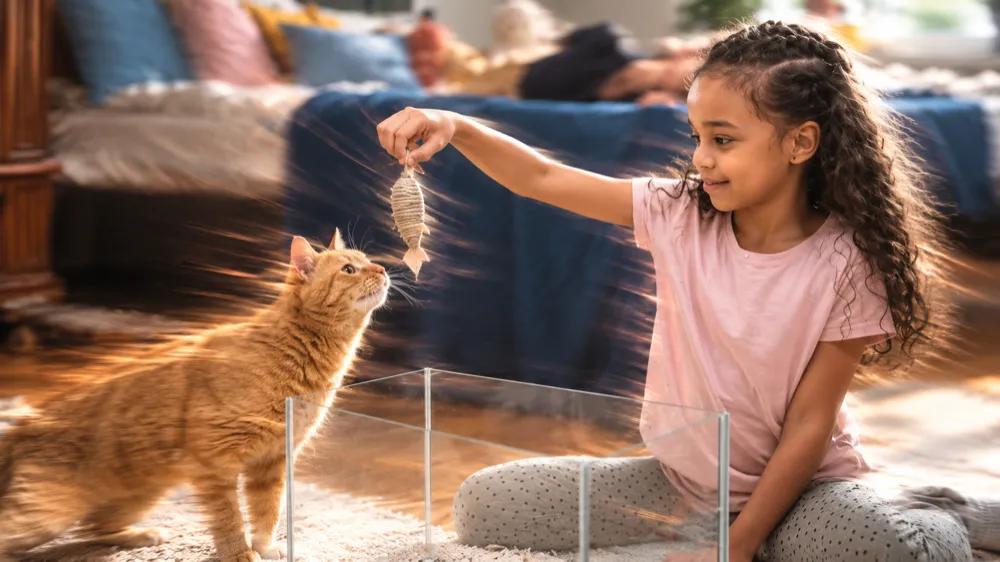
Give your cat time to approach and make contact. Let it sniff your hand, then respond to its preferences. If it appears relaxed and wants attention, gentle stroking around the head and cheeks is a suitable starting point. Let the cat decide how long the interaction lasts.
When it walks away, allow it to leave. Avoid verbal or physical punishment and do not force another attempt at contact. Family members can follow the same simple rule: the cat can end the interaction.
For the wider home-care context, understanding everyday cat behaviour connects these observations with resting places and access to resources. That broader view helps you consider the situation around the gesture.
When cats interact
Chasing and wrestling can happen during play or conflict. Look at whether the interaction is mutual, whether there is vocalisation and how the cats behave together at other times. Wrestling without vocalisation is more likely to be play, but one feature alone should not settle your assessment.
Chasing that is not mutual, with vocalisation and repeated pauses, deserves closer attention. Watch whether one cat is trying to leave. If you are uncertain about the interaction, ask your vet for help interpreting it; a description or a video they can review may help.
Mutual grooming, rubbing against one another and sleeping in contact can indicate a close relationship. Simply eating in the same place does not show the same thing, especially when the food is only available there.
When a newcomer is involved, a gradual introduction provides the separate stages for getting familiar. The first face-to-face encounter belongs within that preparation.
Respond to tension
Keep your hands away from highly aroused cats. Do not try to pick up a cat that is hissing or force contact with one that is cowering. A tense encounter needs space and a way to interrupt visual contact safely.
An inanimate barrier, such as a large piece of cardboard or a cushion, can break the line of sight between cats. Use it only when you can do so safely, without reaching between them or physically handling them. Ask for professional help when you cannot manage separation safely.
Arrange veterinary assessment for a change in behaviour. New hiding, reduced jumping or altered daily routines may reflect medical problems as well as social tension. Describe the change itself so the vet can consider both the cat’s health and what happens at home.
Questions about cat body language
What can my cat’s tail tell me?
Read tail position and movement with the rest of the body and the situation. A loosely wrapped tail can occur with soft muscles in a content cat, while flicking or twitching can accompany agitation. Tail position alone does not establish an emotion.
What do changes in ear position mean?
Flattened or rotated ears can accompany tension or defensive behaviour. Forward ears need context because they can occur in both a relaxed posture and a cat staring during conflict. Look at the rest of the body and what is happening nearby.
Get help with a change
Use Nuzzy PetMap to look for vet clinics when you need help assessing a change in behaviour. Bring a clear description of what you have observed to the care discussion.
Sources
- AAFP task force. 2024 AAFP intercat tension guidelines: recognition, prevention and management. Journal of Feline Medicine and Surgery (2024).
- Ellis SLH et al. AAFP and ISFM Feline Environmental Needs Guidelines. Journal of Feline Medicine and Surgery (2013).
- Quimby J et al. 2021 AAHA/AAFP Feline Life Stage Guidelines. AAHA guideline publication (2021).