Indoor games for dogs can include simple food searches, supervised enrichment toys and reward-based learning. Choose activities around your dog's preferences and individual needs. For a first food search, let your dog see where you place the food, then let them find it. Make the search more challenging as they learn, and stay with them while they use a toy.
You don't need an elaborate setup to try something at home. A place to put the food and a behaviour your dog already knows give you two starting points. Choose an activity you can take part in and observe, without expecting the same game to suit every dog.
Choose a game your dog can enjoy
Dogs' enrichment preferences differ with age, play style and individual needs. Think about what your dog enjoys doing when choosing an activity. A game that another dog eagerly joins may need to be changed or skipped for yours. There is no requirement to work through a list of games in a particular order.
A familiar room can be the setting for a simple attempt. You might choose a food search first, or practise a known behaviour while you are together. Keep the choice manageable for you as well: an activity that needs your supervision should be planned for a time when you can stay involved.
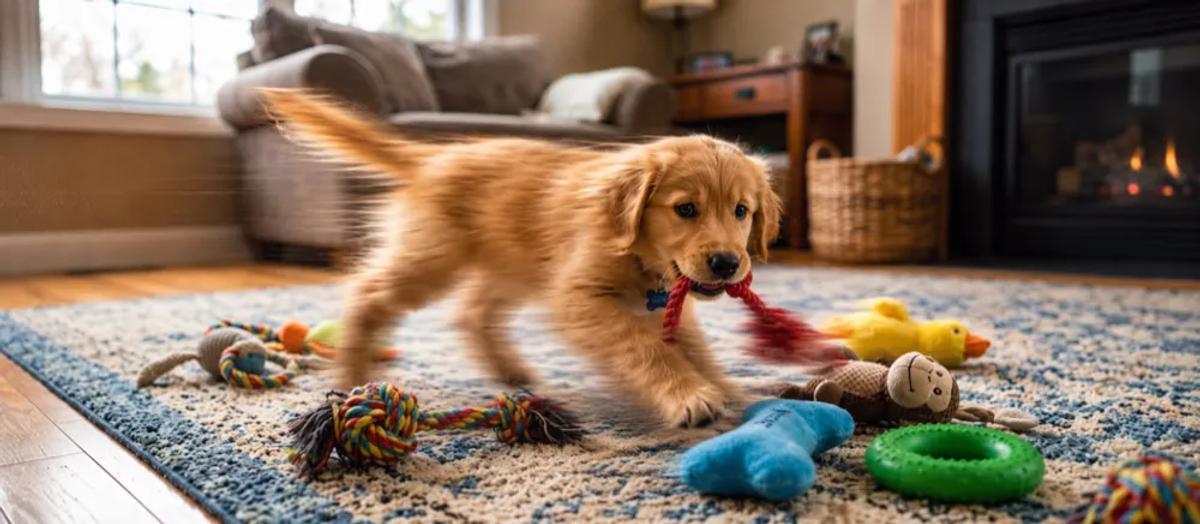
Supervise enrichment toys throughout their use, especially if your dog has a history of eating inappropriate objects. Consider the individual dog before offering a toy. A clever design or a pet-shop label does not establish that it suits every dog who might pick it up.
Try one activity and watch what happens. You can decide whether to offer it again, adjust the difficulty or ask for help choosing something else. You do not need a full shelf of toys before you have found out how your dog responds to the first one.
Start with a food search
Make the first search easy
Begin by letting your dog watch where you put the food. Then let them search for it. This gives the first attempt an obvious starting point, instead of expecting the dog to understand a hidden-food game immediately.
For example, you could use visible placements in one familiar part of the room while your dog watches. Keep food choices within the plan you already use for your dog. An easy search can start with those visible placements, without introducing an improvised container.
Let the dog work through that search before deciding how to change it. The practical sequence is straightforward: the dog sees the placement, searches, and finds the food.
Add difficulty as learning progresses
Once your dog has learned the game, you can make the search more challenging. Do not assume that the first attempt needs to be difficult to count as enrichment. You can adjust its difficulty as the dog learns what to do.
If you are planning a new version, be clear about the change. You might make the placement less obvious after the dog understands an easy search. Let your dog’s learning guide when you change the search, keeping the next attempt manageable for you to set up and observe.
Stay involved in the activity. If you choose to introduce an enrichment toy as part of it, supervise the dog using that toy. Keep watching while the dog searches and uses the toy.
Use toys with supervision
An enrichment toy is something to watch your dog use. Supervision is particularly relevant for a dog with a history of eating inappropriate objects. Keep that history in mind when deciding what to offer and whether you need help choosing a suitable activity.
You can ask for a demonstration of a toy before deciding whether to use it. Focus on what the dog is expected to do and how you will supervise it. A product photograph may show the finished arrangement without making the practical use obvious.
You do not have to make every game more complicated. If you cannot work out whether a toy suits your dog, leave that choice open and ask for advice. You can keep using a familiar activity while you decide.
Practise a familiar behaviour
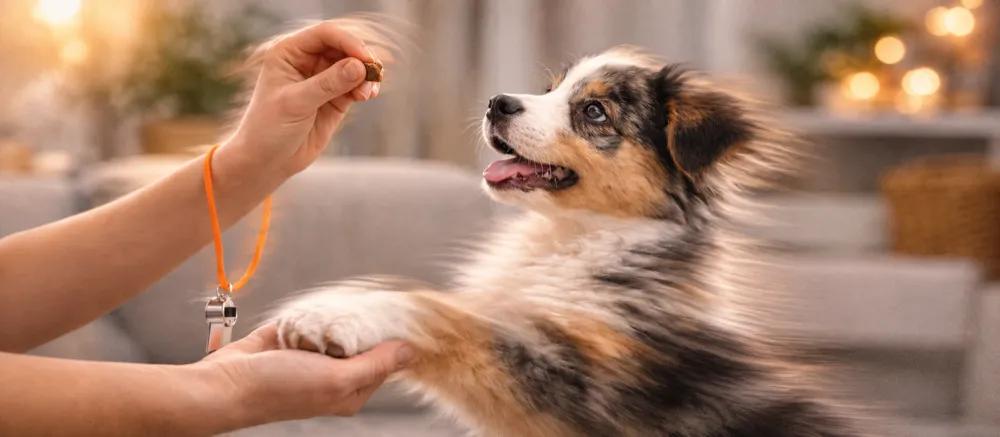
Reward-based learning can provide enrichment too. Sit, down and stay are examples of behaviours to practise. Choose one you know how to work on and reward the response you want. You can focus on that familiar action without inventing a new trick for every session.
Make your own task clear. Decide which response you are watching for and have the reward accessible. If you need help with the exercise, ask for a demonstration. This keeps the practice tied to a specific behaviour rather than a general request for the dog to pay attention.
Use reward-focused methods and avoid aversive corrections. The broader guide to reward-based dog training explains the welfare evidence behind that choice. Keep the reward tied to the response you are practising.
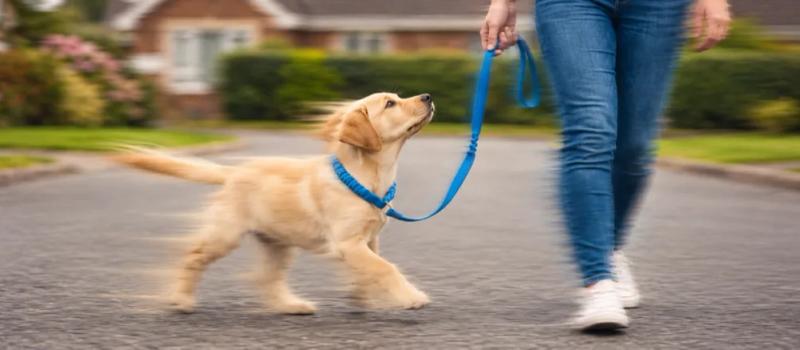
When you want to carry reward-based practice into a walking task, our guide to rewarding a loose lead describes the specific method. Keep each exercise clear enough that you know which response you are rewarding.
Fit games into the wider routine
Include indoor enrichment within your dog's wider exercise plan. The activities need to suit the dog, and they do not establish that all physical activity needs have been met. Discuss those needs with your veterinary team when adapting the routine.
If changing weather is why you are looking for an activity at home, keep the outdoor decision in view too. The guide to adjusting walks for heat covers that separate question. An indoor game can be one choice within the day's plan.
Some dogs with behaviour problems are too distressed for simple enrichment alone to help. If your concern is separation-related distress, take it to your vet for assessment and referral. A supervised game at home does not amount to treatment for fear or anxiety.
Try one simple activity while you are home and watch whether your dog enjoys it. Ask your vet for advice if individual health needs make activity choices difficult. You can leave the next game for another day.
Frequently asked questions
What indoor games can dogs play on rainy days?
Simple food searches and reward-based practice are options to consider. Begin a search with visible food placement, supervise enrichment toys and choose activities around your dog's preferences. Sit, down or stay can provide a familiar behaviour to practise while you are together.
How can I exercise my dog at home?
Use enrichment such as food searches and reward-based learning within an individual activity plan. Discuss physical activity needs with your veterinary team. An indoor game does not establish an equivalent number of walking minutes or show that every activity need has been met.
Sources
- 2019 AAHA Canine Life Stage Guidelines. Creevy and colleagues.
- Canine enrichment ideas. Aly Cohen, Cornell Riney Canine Health Center, 2023.
- Changing behaviors. 2015 AAHA Canine and Feline Behavior Management Guidelines.
- Does training method matter? Evidence for the negative impact of aversive-based methods on companion dog welfare. Vieira de Castro and colleagues, PLOS ONE, 2020.
- Make it stop: unruly behaviors. E’Lise Christensen, AAHA conference proceedings, undated.