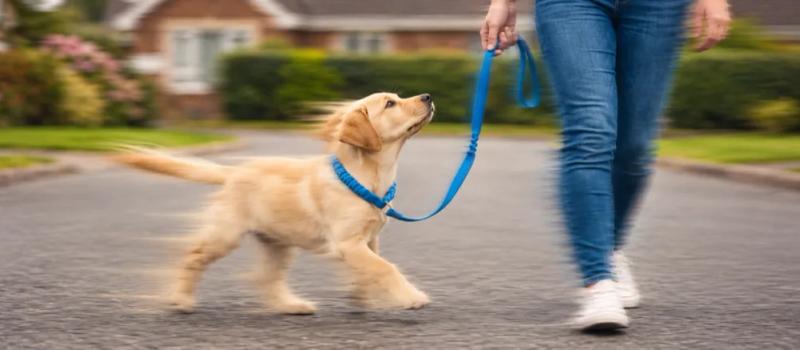
Dog training is teaching your dog which behaviours are worth repeating. That is the whole mechanism, and everything else is detail about how you go about it. On the how, the research points one way with reasonable consistency: training that relies on corrections carries a measurable welfare cost, and the dogs that get it show more signs of stress than dogs taught with rewards. There is a second half to this that almost nobody writing about dog training in India mentions. The Prevention of Cruelty to Animals Act, 1960 has specific things to say about how you keep and exercise your dog, and some of them land squarely on how you train.
The Evidence on Training Methods
Training methods sort into two rough families. Reward-based methods give the dog something it wants when it gets things right, or take away something it wants when it doesn't. Aversive-based methods apply something unpleasant, or lift something unpleasant once the dog complies. Most trainers who advertise themselves as "balanced" are mixing the two.
A 2020 study in PLOS ONE followed 92 pet dogs across seven training schools near Porto, in Portugal. Three of those schools used no aversive techniques at all. Two used them in over three quarters of their recorded interactions, at 0.76 and 0.84 of the techniques the researchers coded. The researchers filmed training sessions, collected saliva to measure cortisol, and then ran the dogs through a separate task that tests whether an animal reads an ambiguous situation as promising or as threatening.
Dogs from the heavily aversive schools showed more stress-related behaviours during training, spent more time tense, panted more, and had larger rises in cortisol afterwards. They were also more pessimistic in the ambiguity task, which happened away from the training ground entirely. The authors concluded that aversive-based methods, used in high proportions, compromise dog welfare both inside and outside the training context.
Two things about that study deserve stating plainly. Dogs could not be randomly assigned to schools, so it compares groups that owners had already chosen for themselves. And it ran in Portugal, not here.
A separate 2018 study, also in PLOS ONE, took a different route into the same territory. It surveyed 1,564 dog owners on how willing they were to use forceful training methods, then scored their dogs on a validated behaviour questionnaire. The authors describe what they found as modest, positive associations between the use of aversive or confrontational methods and six problems: aggression towards the owner, aggression towards strangers, separation problems, chasing, persistent barking, and soiling indoors. Their own caution matters as much as the finding. They write that it is still unclear whether an owner's use of confrontational training is a symptom or a cause of the dog's behaviour problems. A dog that already lunges may well be producing the harsher handling.
So the honest summary is narrower than a slogan, and it is about cost rather than results. Nothing in this research measured whether dogs learn faster one way or the other, and this article does not claim they do. What was measured is that aversive methods produce stress that shows up in behaviour, in cortisol, and in how a dog reads the world afterwards. The 2015 AAHA behaviour guidelines, written for veterinary practices rather than pet parents, turn that into an instruction for vets: avoid forced restraint and punitive training and management methods.
Why any of it matters beyond the dog's comfort is set out in the 2020 study, which notes that behavioural problems are the most frequently cited reason dogs are rehomed to shelters or put to sleep.
Indian Law on How You Treat Your Dog
The Prevention of Cruelty to Animals Act, 1960 applies to your dog, and four clauses of Section 11 touch training directly. Almost no training article written for an Indian audience covers this ground.
Section 11(1)(a) covers anyone who "beats, kicks, over-rides, over-drives, over-loads, tortures or otherwise treats any animal so as to subject it to unnecessary pain or suffering or causes or, being the owner permits, any animal to be so treated". Those four words in the middle, "being the owner permits", are doing real work. The clause reaches an owner who allows the treatment, and not only the person whose hands are on the dog.
Section 11(1)(f) covers anyone who "keeps for an unreasonable time any animal chained or tethered upon an unreasonably short or unreasonably heavy chain or cord".
Section 11(1)(g) is worth reading twice. It covers an owner who "neglects to exercise or cause to be exercised reasonably any dog habitually chained up or kept in close confinement". Exercising a confined dog appears in Indian law as a duty rather than as good practice, and neglecting it is an offence.
Section 11(2) then extends liability. An owner "shall be deemed to have committed an offence if he has failed to exercise reasonable care and supervision with a view to the prevention of such offence".
The penalties deserve an honest description. They are the 1960 figures and have never been revised. A first offence carries a fine "which shall not be less than ten rupees but which may extend to fifty rupees". A second offence within three years reaches a hundred rupees, or up to three months imprisonment, or both. Nobody should pretend a fifty rupee fine deters anyone in 2026. What Section 11 offers you instead is the establishment of a duty, which becomes useful when you are arguing with a trainer, a builder, or a relative who thinks a stick is a training tool.
On shock collars and e-collars, a note about what could and could not be established. Some countries have banned these outright, and the PLOS ONE authors mention it. We searched the Animal Welfare Board of India's circulars, its published list of rules and regulations, and the section index of the Prevention of Cruelty to Animals Act for any Indian instrument restricting shock, electronic or prong collars. None was found by targeted searching. That is a narrower statement than saying no such rule exists anywhere in Indian law, and it should not be read as the wider one. What can be said is that no national instrument surfaced, and that Section 11(1)(a) still covers any device that subjects a dog to unnecessary pain.
The First Five Things Worth Teaching
Start here, roughly in this order.
A response to their name. Everything else depends on being able to get your dog's attention before you ask for anything at all. Say the name once, mark the instant they look at you, then pay them for it. Repeat it somewhere slightly noisier the next day.
Sit. This one is useful less as a party trick and more as a default setting, because a dog that offers a sit when it wants something has learned to ask for it.
Coming when called. This matters most in a country where gates get propped open and building compounds spill onto main roads. Never call your dog to do something it dislikes. If the recall word only ever predicts a bath or the end of a walk, it will stop working, and you will have taught that yourself.
Walking on a loose lead. It is slow to teach and worth every session, because Indian pavements and lift lobbies are narrow and a dog that pulls turns an ordinary walk into a negotiation with everyone you pass.
Settling. This is the most underrated item here. The AAHA guidelines describe learning to be calm and settle as having profound consequences for how a dog later handles situations that provoke anxiety. A dog that can switch off on a mat while the doorbell goes is far easier to live with than a dog that knows twenty commands.
Handling belongs on the list too. Work on ears, paws, mouth, and the patch behind the collar in short pleasant sessions, long before you need to, because the morning your vet needs to examine a paw is the wrong morning to start.
When to Start Training
Training begins earlier than most people think, and some of it happens before your puppy ever reaches you.
The AAHA guidelines map behavioural development in dogs by age band. Between three and eight weeks, puppies learn to be calm, and the guidelines note that this learning shapes how they handle anxiety-provoking situations for the rest of their lives. From around five weeks they begin recognising and seeking out other species, including us. Housetraining, according to the same table, is most successfully learned at about eight and a half weeks, once there is enough cortical development for the puppy to associate a preferred surface and to understand that holding on might be desirable.
Between ten and twenty weeks there is an intense period of learning how to explore new environments, where puppies learn about risk and about making mistakes successfully. Then comes the line that should shape how you plan those first months. A dog that has not been allowed to explore new places by fourteen weeks will not go on to do so willingly, and forcing the issue leaves it frozen and badly distressed.
That window does not reopen. If you are bringing a puppy home this month, the detail is in our guide on how to train a puppy week by week.
The Four Problems Most Pet Parents Hit
Almost every training question that arrives in an Indian pet parent's head turns out to be one of four problems.
Your puppy is new and you don't know where to start. You are dealing with toilet training, biting, sleeping through the night, and a socialisation window that closes at fourteen weeks. All of it is covered in how to train a puppy week by week.
Your dog growls, lunges or snaps. Fearfulness had the strongest association with aggressive behaviour of anything researchers measured in a study of over 9,000 dogs. See dog aggression, causes and training.
Your dog falls apart when you leave. The problem is more complicated than the phrase "separation anxiety" suggests, and some of the standard advice makes it worse. See separation anxiety in dogs.
Your dog barks, and your neighbours have started saying things. We have written about the legal half of that problem separately, and the behavioural half is in how to stop dog barking.
Training in an Indian Flat
Advice written for a house with a garden in Surrey does not survive contact with a two-bedroom flat in Thane.
Heat sets your schedule for you. From March to June across most of India, the middle of the day is not training time, and it is often not walking time either. Sessions move to early morning and after dark, which means your dog learns recall and lead work in low light and around a different set of distractions than a European dog would meet. Plan for that.
Lifts are their own training project. Your dog needs to be able to stand in a small metal box with strangers, sometimes strangers who are frightened of dogs, without reacting. Practise it when the lift is empty. Reward calm standing long before you need it in a crowd.
The people around your building matter more than any technique. Watchmen, delivery riders, domestic staff and the children who play in the compound are the humans your dog will meet most often, and a dog that has met them calmly and repeatedly, with something pleasant happening each time, will not bark at them for the next decade.
Festivals need planning. Loud percussive noise over several consecutive nights is a real welfare problem for a noise-sensitive dog, and that work starts months ahead of the evening itself.
Societies complicate all of it. If yours is making demands about where your dog can walk or whether it can use the lift, the rules are narrower than most committees claim. We have written about pet rights in housing societies separately.
When to Stop and Call a Professional
Some behaviour is not a training problem at all.
A dog that suddenly becomes snappy, stops enjoying being touched, or changes its behaviour without an obvious reason may be in pain. The AAHA guidelines are direct about this: behavioural changes warrant veterinary evaluation to rule out an underlying medical condition before anyone starts a training plan. Arthritis, ear infections, dental pain and eye disease all show up as behaviour before they show up as anything else. The same guidelines add that there is no evidence pets grow out of behavioural problems as they socially mature, a stage they place at twelve to thirty-six months in dogs.
So the sequence runs vet first, then trainer. If you need to find a vet near you, that is what PetMap is for.
Choosing a trainer is harder and we cannot shortcut it for you. Two questions are worth asking before you book anything. Find out what the trainer does when your dog gets something wrong, and find out what equipment goes on your dog. A trainer who cannot answer the first without reaching for the word "correction", or who wants a prong or shock collar involved, is telling you which body of evidence they have not read. Ask to watch a session before you commit to a course.
Frequently asked questions
Can I train my dog at home, or do I need a class?
Most of the basics can be taught at home. Name response, sit, settle and handling need nothing except food, a quiet room and short sessions. Recall and loose-lead walking eventually need practice in public, because a dog that only listens in your living room has not learned much. Classes help most with the social element and with getting feedback on your timing.
How do I teach my dog to sit?
Hold a small piece of food at your dog's nose and move it slowly back over the head. The rear end usually drops as the head lifts. Mark the moment the bottom touches the floor and pay immediately. Add the word only once the movement is happening reliably, otherwise you are naming something the dog cannot yet do.
How long should a training session be?
Keep it short. A few minutes several times a day beats one long session, especially for puppies and especially in Indian summers when heat shortens everyone's patience.
Is it too late to train an adult dog?
No. The AAHA guidelines note that dogs never stop learning from their experiences. What changes with age is that you may be working against an established habit rather than a blank slate, which takes longer without being a different process.
Are shock collars legal in India?
No Indian instrument restricting them was found by targeted searching of the Animal Welfare Board of India's circulars and rules and of the Prevention of Cruelty to Animals Act. That is not a statement that none exists. Section 11(1)(a) of that Act does cover treating an animal so as to subject it to unnecessary pain, which applies whatever the device.
Do reward-based methods work faster than corrections?
We cannot tell you that, because none of the research cited here measured how quickly dogs learn under each approach. What it measured was welfare, and on that the finding is consistent: aversive methods produce more stress behaviour and higher cortisol.
Sources
- Prevention of Cruelty to Animals Act, 1960, Section 11, India Code, Ministry of Agriculture and Farmers Welfare, Department of Animal Husbandry and Dairying
- Prevention of Cruelty to Animals Act, 1960, gazette copy, Animal Welfare Board of India
- Animal Welfare Board of India, circulars and rules and regulations, the surfaces searched for instruments on training devices
- Vieira de Castro AC, Fuchs D, Morello GM, Pastur S, de Sousa L, Olsson IAS (2020). Does training method matter? Evidence for the negative impact of aversive-based methods on companion dog welfare. PLOS ONE 15(12): e0225023
- Dodman NH, Brown DC, Serpell JA (2018). Associations between owner personality and psychological status and the prevalence of canine behavior problems. PLOS ONE 13(2): e0192846
- 2015 AAHA Canine and Feline Behavior Management Guidelines, American Animal Hospital Association. J Am Anim Hosp Assoc 2015; 51:205 to 221
- Behavioral development in dogs, Table 2, 2015 AAHA Canine and Feline Behavior Management Guidelines
- Age and behavior, 2015 AAHA Canine and Feline Behavior Management Guidelines