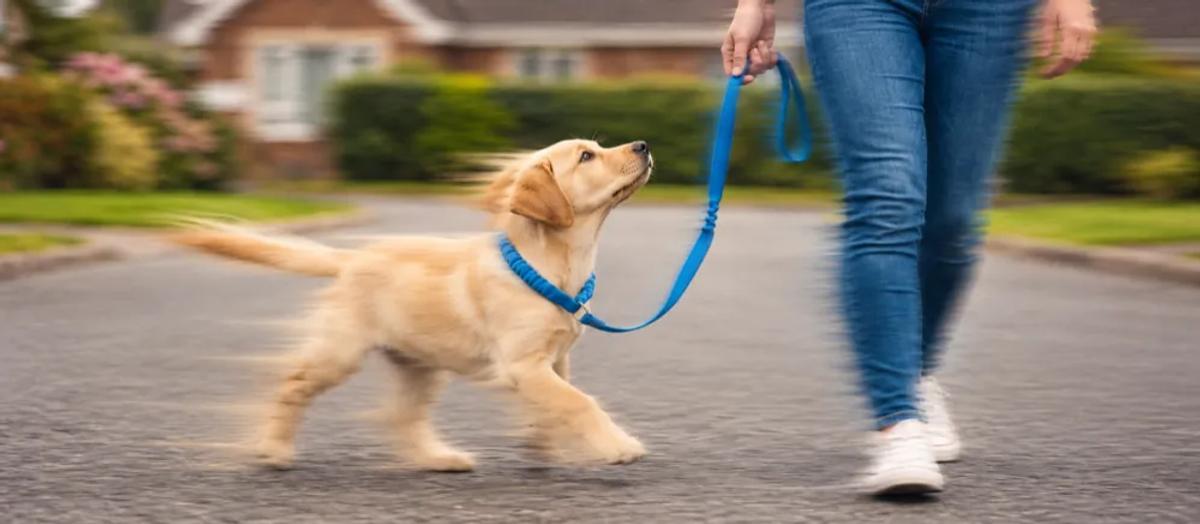
Leash training for dogs involves rewarding the dog for walking beside you and responding gently when pulling starts. Give the reward where you want the dog to walk. If the lead becomes tight, methods used in loose-lead training include stopping or changing direction until the dog returns. Do not turn the change of direction into a jerk.
The lead may be in your hand, but there is a skill to teach at the other end. Ordinary pulling can be a reason to ask for coaching. Fear, anxiety or behaviour that threatens safety needs a veterinary assessment and appropriate referral, with the concern described honestly before practice continues.
Set up controlled practice
Begin with suitable control for your dog and the setting. Discuss the lead and walking equipment with your vet if you are unsure about the arrangement. Ask how to use the equipment during practice, including how to handle the lead gently while keeping rewards accessible.
Be clear about the position you want to reward. Watch for your dog walking beside you, with the reward delivered beside your leg. This gives you an observable action to recognise. You are looking for the dog in that position, rather than trying to reward a vague idea of being well behaved.
Before starting, make the reward accessible to you. Think through the action you intend to take when the dog is beside you and what you will do when pulling begins. You’ll be watching the dog’s position while holding the lead and giving the reward, so think through how to manage those actions together.
Reward a loose lead
Reward the position
Reward your dog when they walk beside you. Deliver the reward close to the position you want, instead of reaching far ahead to the place you are trying to change. The point of the exercise is to reinforce walking beside the person holding the lead.
Suppose your dog is beside your leg and you give a reward there. As the dog moves with you, look for that position again. Keep your attention on where the dog is in relation to you, with the reward ready for the behaviour you want to practise.
The reward needs to belong to the behaviour you are practising. If you are working on walking beside you, watch for that action. If you switch to a different exercise, be clear about the new response you are rewarding. Trying to work on several things at once can make your own task harder to follow.
Respond when pulling starts
When the dog pulls, stop the walk or change direction until they come back to you. Keep the movement gentle. The method does not call for snapping the lead, pulling the dog back into position or tightening equipment around them.
Once the dog is beside you, recognise that position with a reward. You are returning to the behaviour you want to practise. You may find it awkward to keep track of the lead and the reward at the same time, even when the instruction itself sounds straightforward.
Ask for a demonstration that includes pulling, not only a demonstration with a dog already walking neatly. You need to see what the trainer does at the difficult moment. Watching the response gives you a more useful basis for deciding whether you can follow the method yourself.

Choose reward-based methods
Use reward-focused training and avoid aversive corrections. A study comparing dogs in different training schools found more stress-related behaviour among dogs in the aversive group. The research concerned welfare, rather than a timetable for learning a skill.
The dogs were not randomly assigned to the training schools, so the study cannot establish that the method alone caused the differences. It did not compare the effectiveness of the methods either. A promise that one technique will teach loose-lead walking within a particular number of days goes beyond what this research supports.
The broader discussion of reward-based dog training covers the method evidence. For this exercise, keep the practical instruction straightforward: reward the desired position and use gentle handling when you respond to pulling.
Before arranging coaching, ask the trainer what they do when a dog gets something wrong. Ask what equipment they use and whether you can watch them explain the exercise. Choose a vetted trainer who uses positive reinforcement. A clear description of the method is something you can request before committing to a course.
Get help for the right problem
Tell your vet if the behaviour involves fear, anxiety or a threat to people or other animals. Veterinary assessment can establish what sort of help is needed and guide referral. Do not describe a safety concern as ordinary pulling simply because it happens while the dog is on a lead.
For example, when arranging an appointment, say what happened during the outing and what you were doing at the time. Keep the account factual. You can ask who should assess the dog and whether a trainer's coaching is appropriate, without deciding on a diagnosis yourself.
Ordinary training help has a different purpose: a vetted positive-reinforcement trainer can coach the practical exercise. Ask them to watch where you deliver the reward and how you respond when the lead tightens. Those are specific parts of the method you can discuss and practise together.
Keep lead practice connected to your dog's wider exercise plan. The household still needs to plan physical activity and enrichment around the individual dog. Learning to walk beside you is one task within that plan. Keep questions about physical activity separate from the practical skill you are working on.
Frequently asked questions
What should I practise when leash training a puppy?
Practise rewarding the puppy beside you, and get coaching if you need help applying the method. Respond gently when pulling starts, using the stop-or-turn approach described above. Ask your vet about fear or safety concerns. Focus on applying the method with gentle handling as you practise.
How does loose-leash walking training work?
It reinforces walking beside the person holding the lead. Reward that position, and stop or change direction when pulling begins until the dog returns. Keep the handling nonaversive; turning must not become jerking or a pressure-release exercise.
Sources
- Make it stop: unruly behaviors. E’Lise Christensen, AAHA conference proceedings, undated.
- Changing behaviors. 2015 AAHA Canine and Feline Behavior Management Guidelines.
- 2019 AAHA Canine Life Stage Guidelines. Creevy and colleagues.
- Canine enrichment ideas. Aly Cohen, Cornell Riney Canine Health Center, 2023.
- Does training method matter? Evidence for the negative impact of aversive-based methods on companion dog welfare. Vieira de Castro and colleagues, PLOS ONE, 2020.