Puppy training in India starts the day your puppy comes home, usually at eight weeks old. Developmental data published by the American Animal Hospital Association puts toilet training at around eight and a half weeks, when a puppy first has the brain development to associate a surface and hold on deliberately. Socialisation matters more than any command, because puppies not allowed to explore new environments by fourteen weeks will not voluntarily do so afterwards. Teach name response, sit, settling and handling first, using food and short sessions, and never punish toilet accidents.
The rest of this explains where those numbers come from. Our guide to dog training in India covers the wider method question and what the law asks of you.
The Windows That Close
The 2015 AAHA behaviour guidelines include a table mapping behavioural development in dogs by age. It is the closest thing to a real week-by-week schedule that exists, and it is worth knowing what it says. AAHA notes that the table is adapted from a clinical behavioural medicine manual, so treat the ages as landmarks rather than deadlines.
Three to eight weeks. Puppies start on semisolid food around three weeks and solid food around five. This is also when they learn to be calm and settle, and the guidelines note that such learning has profound consequences for how a dog later handles situations that provoke anxiety. Most of it happens at the breeder or with the litter before your puppy reaches you, which is one reason where you get a puppy from matters as much as what you do afterwards.
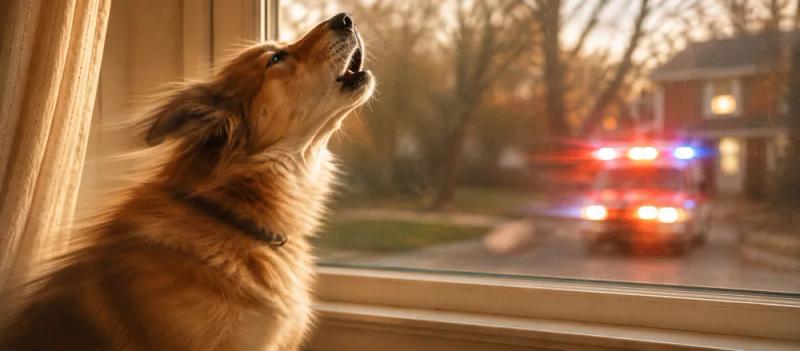
Five to twelve weeks. From about five weeks, puppies begin recognising other species and actively seeking them out, humans included. Interaction with people intensifies from around six weeks. Barking begins at four to five weeks, with growling shortly after, and breed affects how much a puppy vocalises. Weaning is normally finished by seven weeks, and the guidelines are clear that puppies should not be separated from their littermates and mother before eight weeks. Puppies taken away at thirty to forty days rather than fifty-six showed more excessive barking, more fearfulness on walks, more noise reactivity and more possessiveness as adults.
Ten to twenty weeks. Running from about ten to twelve weeks through to sixteen or twenty, this is an intense period of learning how to explore new environments. The guidelines describe puppies at this stage learning about risk and about how to make a mistake successfully. Play gets rougher because that is what it is for.
Fourteen to twenty weeks. This band contains the line that should shape your plan. Dogs not allowed to explore new environments by fourteen weeks will not voluntarily do so afterwards, and if forced, they freeze and become extremely distressed.
Fourteen weeks is not a soft target. Whatever your puppy has not calmly met by then becomes harder for the rest of its life.
Toilet Training at Eight and a Half Weeks
The AAHA table supplies a mechanism, which most routines leave out. Housetraining is most successfully learned at about eight and a half weeks, when there is sufficient cortical development for two things to happen: the puppy can associate a preferred surface, and it can understand that holding on might be desirable. Before that point you are cleaning rather than training.
The same table adds a caveat that saves a lot of frustration. Puppies with small bladders and fast metabolisms may still need to go out hourly even once they are housetrained. AAHA notes separately that young puppies cannot last eight to ten hours without urinating. A puppy that has an accident at eleven weeks has not forgotten anything, and its bladder is the size of a lime.
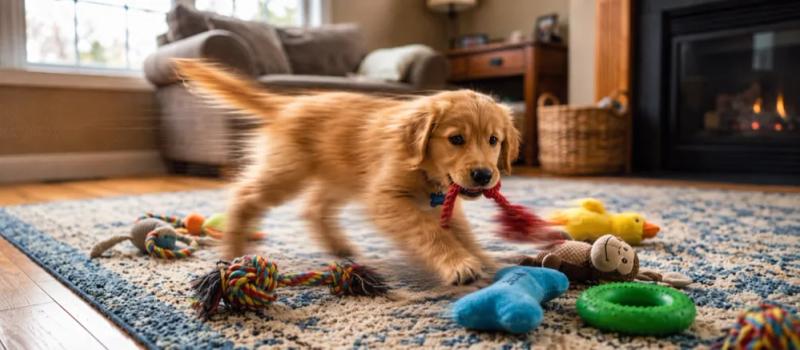
In practice, take your puppy out after waking, after eating, after play, and roughly every hour in between. Go to the same spot. Wait, and pay generously the instant they finish, outside, where the behaviour happened. Accidents indoors get cleaned up without comment, because punishing an accident teaches a puppy to hide from you when it needs to go.
Indian flats add one wrinkle. Many puppies here start on newspaper or a pee pad indoors because they cannot go out until their vaccinations are underway. That works, but it teaches a surface preference twice, once for the pad and once for outside. Move the pad progressively closer to the door, then past it.
Socialisation Without Overdoing It
This is where well-meaning pet parents cause damage, and almost no puppy article covers it.
Socialisation is not exposure for its own sake. The AAHA guidelines flag two risks. The first is assuming exposure only counts during a fixed window, when individual puppies in fact develop at different rates. The second is more serious: fear developing during a sensitive period is aggravated by forced social exposure, and overexposure can make a fearful puppy worse, creating what the guidelines call a behavioural emergency.
They put it bluntly. Continuing to expose fearful puppies in the guise of socialising them instead sensitises them.
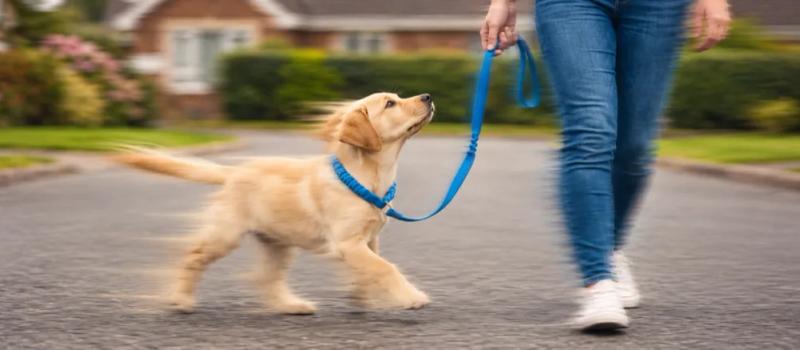
So the rule is not "take your puppy everywhere". Your puppy should meet new things at a distance and intensity where it stays relaxed, and you back off the moment it does not. A puppy hiding behind your legs at a crowded market is learning that markets are frightening and that you will not help.
One more line from these guidelines runs against what many Indian vets tell people, and it is worth quoting in full. Puppies born to healthy, properly vaccinated mothers and engaged in an active vaccination programme have a low risk of contracting infectious diseases, and there is no medical reason to delay puppy classes or social exposure until the vaccination series is completed, as long as exposure to sick animals is prohibited, basic hygiene is practised and diets are high quality. The guidelines add that the risks of missing social exposure far exceed any disease risk.
That is AAHA's published position, and it does not override your own vet, who knows your puppy, your building and your locality, and who may have specific local reasons for a different view. Take the guideline to them and have the conversation. Our guide to the puppy vaccination schedule in India covers what the course involves and when.
What to Teach in the First Month Home
Four things belong here, and none of them are tricks.
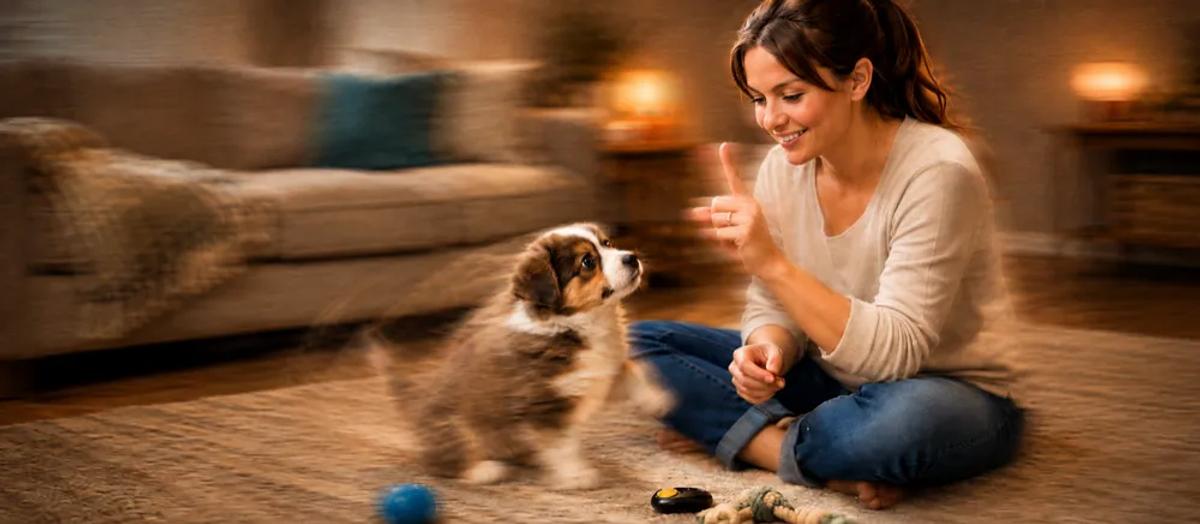
Their name. Say it once, mark the moment they look, then pay. Everything else needs this first.
Sit. Hold food at the nose and move it slowly back over the head, so the rear drops as the head lifts. Name it once it happens reliably.
Settle. Reward your puppy for lying quietly on a mat while ordinary life happens around it. This is the skill you will be most grateful for in three years.
Handling. Work on ears, paws, mouth and the patch behind the collar in short pleasant sessions. Start while everything is new and nothing hurts.
Keep sessions to a few minutes and repeat them through the day. A puppy's attention is short, and in an Indian summer so is everyone else's.
What Not to Do
Do not use corrections, and do not let anyone else use them on your puppy either.
A 2020 PLOS ONE study of 92 dogs found that those trained with a high proportion of aversive methods showed more stress behaviours and higher cortisol after sessions. A 2018 PLOS ONE survey of 1,564 owners found modest associations between willingness to use forceful methods and higher reported rates of aggression, separation problems and persistent barking, though its authors note the direction of causation is unresolved. Neither study measured how fast dogs learn, so nobody should tell you rewards are quicker. What was measured is the welfare cost of the alternative.
The other thing not to do is wait. The AAHA guidelines observe that patients do not outgrow pathological fear, and that ten per cent of puppies who were fearful during a physical examination at eight weeks were still fearful at eighteen months. A frightened puppy is not going through a phase.
For the wider picture on method, law and the first commands, see our guide to dog training in India.
Frequently asked questions
What age should I start training a puppy?
Start the day your puppy arrives. Formal sessions are very short at eight weeks, but socialisation and handling start immediately because the developmental windows are already running.
How do I toilet train a puppy?
Take them out after sleeping, eating and playing, and hourly between. Reward outdoors immediately. Expect it to click around eight and a half weeks and to stay imperfect for weeks after.
What commands should a puppy learn first?
Teach name response, sit, settle, and being handled. Recall comes next and matters enormously, though it needs more space than most first-week puppies get.
Can I take my puppy out before its vaccinations are finished?
The AAHA guidelines say there is no medical reason to delay classes or social exposure provided sick animals are avoided and basic hygiene is followed. Your vet may have local reasons to advise otherwise. Ask them directly.
My puppy barks at everything. Is that normal?
Barking starts at four to five weeks and breed affects how much. Whether it becomes a problem depends on what it gets rewarded for. See how to stop dog barking.
Sources
- 2015 AAHA Canine and Feline Behavior Management Guidelines, American Animal Hospital Association. J Am Anim Hosp Assoc 2015; 51:205 to 221
- Behavioral development in dogs, Table 2, 2015 AAHA Canine and Feline Behavior Management Guidelines
- Age and behavior, 2015 AAHA Canine and Feline Behavior Management Guidelines
- Vieira de Castro AC, Fuchs D, Morello GM, Pastur S, de Sousa L, Olsson IAS (2020). Does training method matter? Evidence for the negative impact of aversive-based methods on companion dog welfare. PLOS ONE 15(12): e0225023
- Dodman NH, Brown DC, Serpell JA (2018). Associations between owner personality and psychological status and the prevalence of canine behavior problems. PLOS ONE 13(2): e0192846