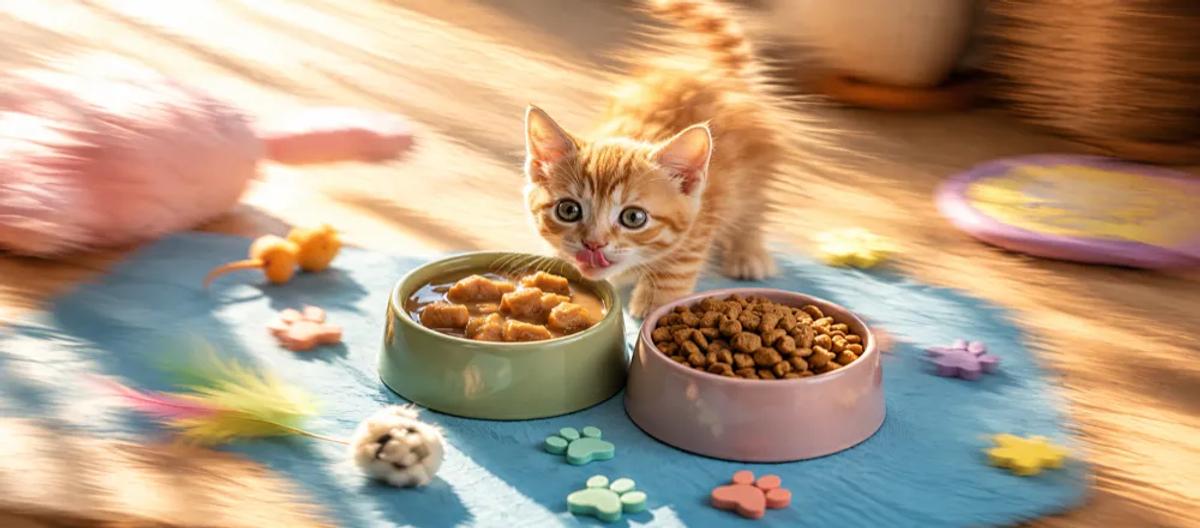
Wet and dry cat foods can both be options when the exact product is complete for your cat's life stage. Wet food supplies more moisture, while the choice also depends on what your cat accepts and how you will handle the food. Use the WSAVA food-label guidance and the Cornell feline food-format advice before deciding between the bag and the pouch.
Our what do cats eat guide covers the wider daily-diet checks. Keep the actual bag and pouch in front of you when comparing them.
Check nutritional completeness first
Read the nutritional adequacy statement on each product you are considering. A pouch may be intended as a complete food or have a more limited place in the diet; its format alone does not settle that question.
Check the life stage too. Keep the details of both products in front of you if you are comparing them. It is easy to compare flavour names while overlooking whether the foods are intended for the same stage.
Ingredient names and premium wording do not establish the nutritional quality of the finished food. Questions about formulation expertise and quality control offer more useful information. Ask the manufacturer when the packet leaves a question unanswered.
For a practical comparison, save a photograph of each label. Put the exact product name beside its feeding instructions and calorie information. If your vet has recommended a particular diet, bring the alternative's details to the vet before treating it as a substitute.
How wet and dry food differ
Wet food has more moisture than dry food. Keep fresh water available whichever format you feed, following the NRC cat-nutrition booklet and Cornell feline feeding advice.
Food acceptance is part of the decision. Some cats prefer wet food, some prefer dry, and some accept a combination. Your cat may accept a different format from another cat in the household.
Handling changes with the product. Unused opened wet food needs refrigeration; dry food should be stored according to its instructions, with its original packaging retained. Read the instructions for the actual packet before deciding how to organise meals.
Think through a normal working day. If you share feeding with someone who gets home later, agree who handles each meal and show them the product instructions. If you're unsure how an opened product should be stored, ask the manufacturer before planning the routine around it.
You can use the labels to make a short comparison:
- Record the nutritional statement and intended life stage of each food.
- Keep each product's calorie units next to its feeding instructions.
- Note the cat's acceptance of food already offered, without guessing how an untried food will be received.
- Write down the storage arrangements each product requires at your home.
Take that information to the vet when the choice is unclear. Ask about the exact products you are considering, especially if there is already a feeding plan to follow.
Combining wet and dry food
If you combine formats, count both within the same daily allowance. Include treats and other extras in that total.
Do not add a full daily wet-food ration to a full daily dry-food ration. Those are two separate starting allowances, each intended to be interpreted in context. Ask the vet to set out how much of each food belongs in your cat's plan. The amount of wet food and the amount of dry food should each be clear in that plan.
The calculation concerns calories as well as quantity. Grams of one food cannot automatically replace the same grams of a different food when their calorie densities differ. Our guide to daily cat-food amounts explains the units and how to account for each food. Keep treats within about 10% of the daily calorie allowance, as described in the WSAVA treat guidance and AAHA feeding-plan guideline.
For a healthy cat, plan a gradual food change. A cat with disease needs individual veterinary guidance. Record any difficulty with acceptance and ask for advice about the plan you were given.
Storing the food you open
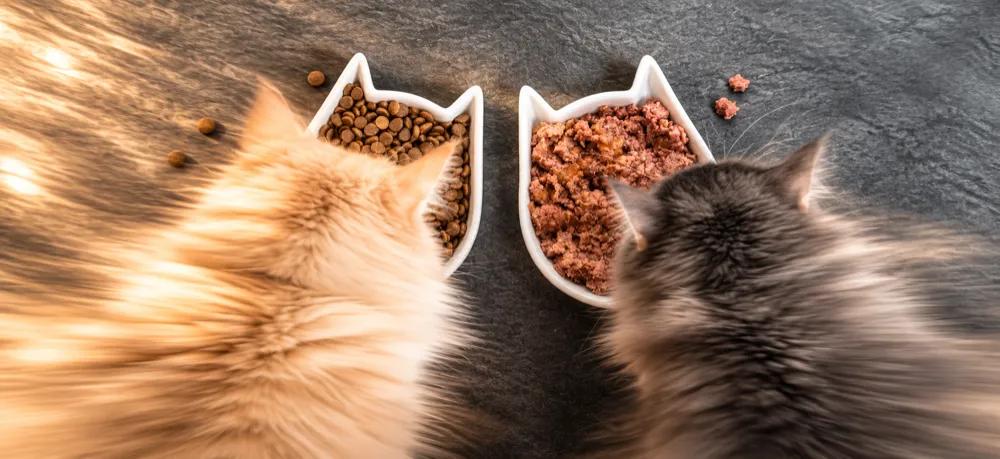
Refrigerate unused opened wet food and follow the product's specific storage instructions. Use the packet's directions when deciding how to handle that product after opening; a general article cannot supply its specific instructions.
Retain the original dry-food packaging. It keeps product information available if you need to contact the manufacturer. Keep dry food in a cool, dry place and check the expiry date. The original bag can be kept inside an appropriate outer container.
If the instructions leave you unsure about handling opened food, contact the manufacturer with the exact product name. Describe the point you need clarified and ask for directions you can follow at home.
Questions about food format
What are the pros and cons of wet and dry cat food?
Wet food contributes more moisture, while both formats need checks for nutritional completeness and life-stage suitability. Their handling requirements differ, and your cat's acceptance matters. For a combination, account for each food within the daily allowance using the AAHA feeding-plan guidance and WSAVA calorie-density advice.
Taking the next step
Use the daily-portion guide to plan a combination with the vet, and return to what do cats eat for the wider diet checks. You can keep weight logs in Nuzzy PetLife when reviewing a feeding change. Bring those records alongside the names and quantities of the foods you have been using.
Sources
- WSAVA guidelines on selecting pet foods.
- WSAVA frequently asked questions and myths.
- Cornell Feline Health Center: Feeding your cat.
- NRC: Your cat's nutritional needs.
- FEDIAF nutritional guidelines for complete and complementary pet food for cats and dogs.
- AAHA: Feeding plans for healthy, appropriate weight cats and dogs.