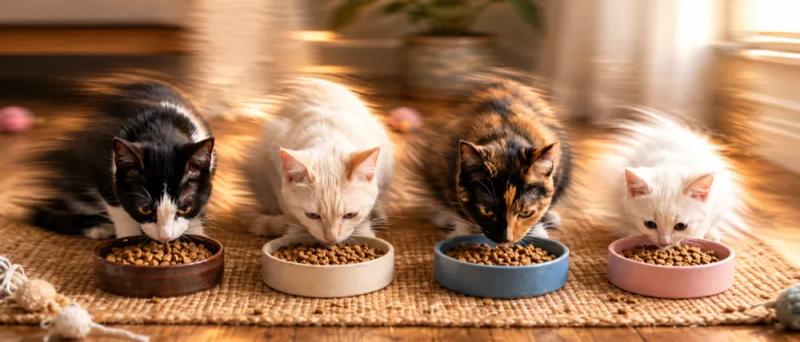
A weaned kitten needs a complete diet formulated for growth. Check that statement on the bag or pouch before using it as the main food.
This guide is for kittens already eating solid food. If your kitten is newborn or unweaned, ask the vet for a separate feeding plan. For the wider daily-diet checks, our what do cats eat guide explains nutritional completeness and the role of extras.
Choosing food for growth
Choose food intended for the kitten's growth stage, and review the amount as the kitten develops. Its energy needs change during growth; an adult cat's daily allowance cannot simply be copied across.
A food's format is a separate choice from its nutritional purpose. Wet food, dry food or a combination can be considered after you have checked completeness and suitability. Turn the packet over. The kitten picture on the front doesn't answer whether this exact food is complete for growth.
If someone else has been feeding your kitten, ask for the product name and amount they have been offering. Include other food the kitten receives when you discuss the current routine with the vet.
Reading the kitten-food label
Find the statement describing the life stage for which the food is complete. Food labelled for all life stages is formulated for growth and reproduction. Ask the vet to help interpret it for your kitten.
Keep the feeding instructions with that information. Label amounts provide a starting point, while the individual animal's needs require review.
When the wording is unclear, contact the manufacturer with the exact product name and ask whether it is a complete food intended for growth. Photograph the wording you are asking about so the company can identify the question. Show the reply to your vet if it still leaves you unsure.
Keep that photograph for the next purchase too. If another family member is buying the food, they can check the full product name against it. When the usual food is unavailable, ask the vet about an alternative and how to make the change. Bring the alternative's label to that conversation.
Building a feeding routine
Agree the daily allowance and meal frequency with the vet. Multiple meals can accommodate a cat's feeding pattern, but the routine should suit the individual kitten. Each serving belongs within the whole day's plan.
Unlimited food access is appropriate only for cats that maintain suitable weight and body condition by regulating their intake. Ask how it applies to your kitten instead of assuming the bowl should always be topped up.
Keep clean, fresh water available at all times, as recommended in the NRC cat-nutrition booklet and Cornell feline feeding reference. Refrigerate unused opened wet food and follow the package's instructions; retain the original dry-food packaging.
Choose one place for the household's feeding note. Record what was offered and what remained, and add who last fed the kitten so the next person can check before serving the next meal. If you don't know what happened before you got home, leave that uncertainty clear.
Home food and extras
A generic kitchen meal or internet recipe may be unsuitable for your kitten's growth needs. A planned home-cooked diet needs individual formulation by a veterinarian with nutrition expertise and ongoing supervision.
Keep extras within about 10% of the daily calorie allowance, following the WSAVA treat guidance and AAHA feeding-plan guideline. That figure is a ceiling. If someone in the family wants to offer something new, bring its details to the vet and include it in the feeding discussion.
Complete and balanced commercial food normally supplies its required vitamins and minerals. Discuss extra supplements before adding them, as advised in the WSAVA supplement guidance and Cornell feline nutrition reference. If you are considering a formulated home-cooked diet, our homemade cat food in India guide covers that separate planning process.
Reviewing food as the kitten grows
Bring recent weights and the current food details to the vet. Ask for a review of the amount and discuss when this kitten should move to adult food.
For a healthy cat, a food change should be gradual. A cat with disease needs individual veterinary guidance. Follow the instructions given for your kitten. Tell the vet if you're having difficulty following the plan or the kitten isn't accepting the food.
Seek veterinary assessment as soon as possible if the kitten is eating nothing or too little to maintain weight. Bring the food and intake details when you ask for help.
Questions about kitten meals
What can I feed a kitten from home?
For a weaned kitten, begin with a complete growth diet. A planned home-cooked diet needs an individually formulated recipe and veterinary supervision. A generic recipe found online is not evidence of suitability for your kitten.
How should feeding change as a kitten grows?
Review the feeding amount with the vet as the kitten grows, using its current food details and weight record. Ask when to discuss an adult food; a single feeding chart cannot establish the right plan for every kitten.
Keeping the growth record
Nuzzy PetLife lets you keep weight logs for the next vet conversation. Our guide to daily cat-food amounts explains the adult portion-setting process, and the what do cats eat guide covers the wider diet checks. Our kitten vaccination schedule in India guide covers the separate vaccination plan.
Sources
- WSAVA guidelines on selecting pet foods.
- WSAVA frequently asked questions and myths.
- Cornell Feline Health Center: Feeding your cat.
- Cornell Feline Health Center: How often should you feed your cat?.
- NRC: Your cat's nutritional needs.
- FEDIAF nutritional guidelines for complete and complementary pet food for cats and dogs.
- AAHA: Feeding plans for healthy, appropriate weight cats and dogs.
- Tufts Clinical Nutrition: Homecooked diet mistakes and misconceptions.