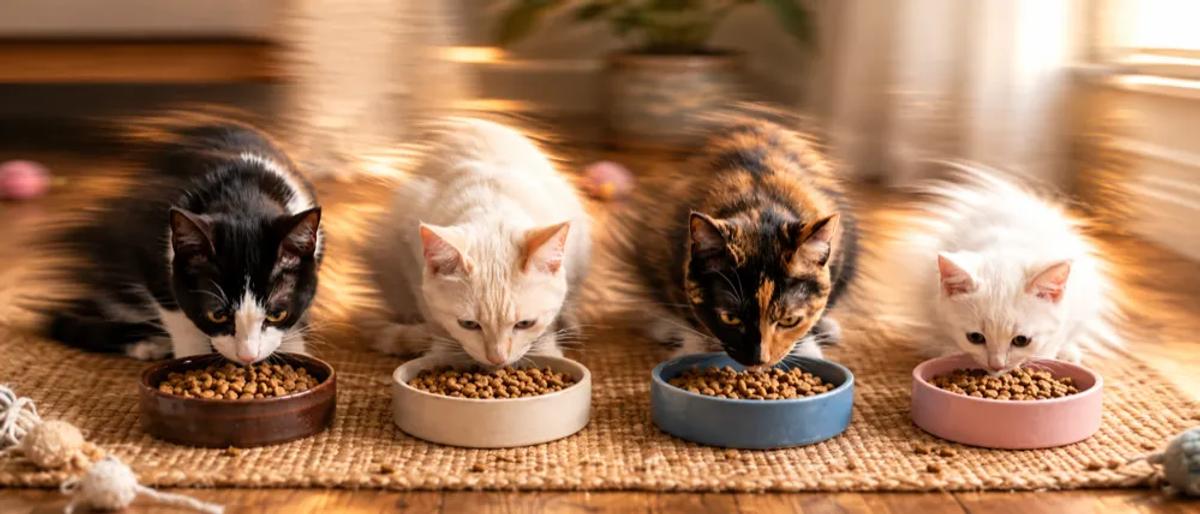
Cats need a complete and balanced diet made for their life stage. Start with the nutritional statement on the food packet, whether you are holding a bag of kibble or a wet-food pouch.
Keep clean, fresh water available at all times. That recommendation applies whichever food format you choose. If you're comparing a familiar home-cooked meal with a packet of cat food, begin with what the whole diet provides. Recognising the ingredients pictured on a bag is only part of reading it.
What makes a cat diet complete
A complete diet supplies the nutrients needed by the species and life stage it is intended for when fed as directed. Cats are obligate carnivores with particular nutritional needs. A familiar meat ingredient does not, on its own, tell you whether the whole meal meets those needs. (FEDIAF complete-food standard, WSAVA nutrition questions and answers, Cornell feline nutrient overview)
Put a treat packet beside the main food and read the nutritional statements on both. Look for the statement about nutritional completeness and who the food is for. A treat packet and a bag of complete food have different jobs in the feeding plan, even when the pictures or flavour names look similar. Treats occupy a limited part of the daily allowance.
Read the back of the packet. If the wording is unclear, take a photograph and ask the manufacturer to explain it. Keep the exact product name in your message so the reply concerns the food you plan to feed. If the reply describes the company in general, ask again about the exact food you have named. You need an answer you can match to the packet in your hand.
For an Indian household considering ghar ka khana, the same question comes first: has this particular diet been formulated to meet this cat's needs? The answer comes from an assessed recipe and its feeding instructions. It cannot be established by checking whether the meal resembles something the family already cooks.
What to check on the food label
Begin with the intended species and life stage. A growing kitten needs food intended for growth. Food described as suitable for all life stages is formulated for growth and reproduction; discuss its suitability for your individual cat with the vet.
Next, find the nutritional adequacy statement. It should tell you whether the product is intended as a complete diet or for a more limited role. If you see wording such as complementary or intermittent feeding, ask how that product fits into the overall plan before making it the main food. (WSAVA food-selection document, FEDIAF complete and complementary food standard)
The ingredient list offers information about what is in the product, but ingredient names alone do not establish its nutritional quality. Questions about the formulator's expertise and the manufacturer's quality checks are useful too. (WSAVA selection criteria, WSAVA ingredient-list explanation) Words such as premium can look reassuring without answering them.
You can send the company a short request:
- Ask whether the exact food is complete for your cat's life stage.
- Ask who formulates it and what relevant qualifications they hold.
- Request its calorie content if you cannot find it on the packet.
- Ask how the finished food is checked against its stated nutritional purpose.
When you discuss the food with the vet, show both the label and the manufacturer's reply. Ask them to explain any terms you don't understand before you make the food the main diet. If the company sends a document covering several foods, check which part applies to yours.
Read the feeding instructions with the same care. Check which product and life stage they describe, then ask how the starting amount should be used for your cat. A useful reply should leave you able to identify the food and understand the next step. You shouldn't have to guess which part of a technical document the company intended you to follow.
Choosing wet or dry food
Once a product's completeness and suitability are established, wet food, dry food or a combination can be considered according to your cat's needs and acceptance. (WSAVA adequacy check, Cornell feline food guide) A wet pouch still needs its own label check.
Wet food supplies more moisture than dry food. (FEDIAF food-format definitions, Cornell feline food descriptions) You will also need to consider how to handle the food once opened. Our wet vs dry cat food guide takes those decisions further.
Refrigerate unused opened wet food and follow the product's storage instructions. For dry food, retain the original packaging and follow its storage guidance. (WSAVA food-storage advice, Cornell feline feeding reference) If you use an outer storage container, keeping the original bag also leaves the product details available when you need them.
Before buying a different format, read its handling instructions and check that you can follow them at home. Work out where opened food will go and who will serve the next meal. If a family member handles evenings, talk through the change with them before leaving a new packet beside the bowl.
Feeding a growing kitten
For a weaned kitten already eating solid food, choose food intended for growth. Energy needs change as the kitten grows, so review the plan with your vet. An adult cat's feeding amount won't set the right plan for a growing kitten.
Keep the current food details and recent weight records for your vet. Ask how the feeding amount should be reviewed as your kitten grows and when to discuss a move to an adult food. This guide covers kittens eating solid food; newborn or unweaned feeding needs a separate conversation with the vet.
The what to feed a kitten guide explains the label checks and household routine for that stage. Use it to prepare questions about the food you already have. If the kitten came to you with a feeding routine, ask the previous carer for the product details and amount they were offering. Bring those to the vet when agreeing the plan from here.
Planning home-cooked meals
A home-cooked diet needs to be formulated for the individual cat by a veterinarian with nutrition expertise and used under veterinary supervision. Tell the clinician what you can prepare consistently and which ingredients you can obtain before the recipe is drawn up.
A generic online recipe may have nutritional deficiencies or be unsuitable for your cat. Familiar ingredients and a reassuring recipe title do not establish that it is a complete daily diet.
Take your practical constraints to the consultation. Explain whether you will cook each meal yourself or share the work. If cooking has to fit around your working day, say what preparation you can manage consistently. Ask for instructions that make clear who should be contacted if the plan becomes difficult to follow.
Our homemade cat food in India guide covers preparing for that conversation and following the recipe you receive. Start with your regular vet if you need help identifying appropriate nutrition expertise. Ask about the actual arrangements available to you before making a change.
Treats and supplements
Keep treats and other extras within about 10% of your cat's daily calorie allowance. That is the upper limit. You don't need to use the whole allowance.
Write down what is being offered outside the main meals. Use the full product names, including the variety if that is how you identify the food. If the label does not provide calorie information, ask the manufacturer. Ask everyone who offers food to contribute, so a treat given while you're away is included too.
A complete and balanced commercial diet normally provides its required vitamins and minerals. Discuss additional supplements with the vet before adding them. Supplements prescribed as part of an individually formulated home-cooked recipe belong to that recipe's instructions.
Keep that distinction clear when discussing a supplement: explain whether you want to add it to a complete commercial food or whether it is already prescribed in your cat's home-cooked recipe. Bring the product details and any existing prescription to the vet.

Finding the right daily amount
The amount on the food label is a starting point. Individual cats have different energy needs, and no single calculation describes them all.
Ask the vet to assess weight and body condition, and agree how you will review the feeding amount. A note of the food offered and any leftovers can make the conversation more specific. Include the exact product details so that a change in the food is visible alongside a change in the amount.
Our guide to how much to feed a cat per day explains the calorie units and how different foods fit within one daily allowance. Ask for the amount in units you can use with the chosen food, and check any part you don't understand. If a new packet gives different instructions, take that information back to the vet before treating the old amount as interchangeable.
A cat eating nothing, or too little to maintain its weight, needs veterinary assessment as soon as possible. Do not wait for the next routine review to raise that concern.
Questions about everyday cat food
What can cats eat?
For everyday meals, choose a complete diet suited to the cat's life stage. Keep occasional extras within the agreed daily allowance. A planned home-cooked diet needs individual formulation and supervision, as described in the WSAVA nutrition guidance and Tufts recipe advice.
What do cats eat and drink?
Cats need suitable complete food and access to clean, fresh water. Water should remain available with either wet or dry food. (NRC cat-nutrition booklet, Cornell current feline feeding advice) Choose the food through its nutritional statement and the cat's individual needs.
Keeping track of feeding changes
You can keep your cat's weight logs in Nuzzy PetLife and bring that history to the next vet visit. For a separate part of routine care, our cat vaccination in India guide covers vaccination.
Sources
- WSAVA guidelines on selecting pet foods.
- WSAVA frequently asked questions and myths.
- Cornell Feline Health Center: Feeding your cat.
- Cornell Feline Health Center: How often should you feed your cat?.
- NRC: Your cat's nutritional needs.
- FEDIAF nutritional guidelines for complete and complementary pet food for cats and dogs.
- AAHA: Feeding plans for healthy, appropriate weight cats and dogs.
- Tufts Clinical Nutrition: Homecooked diet mistakes and misconceptions.