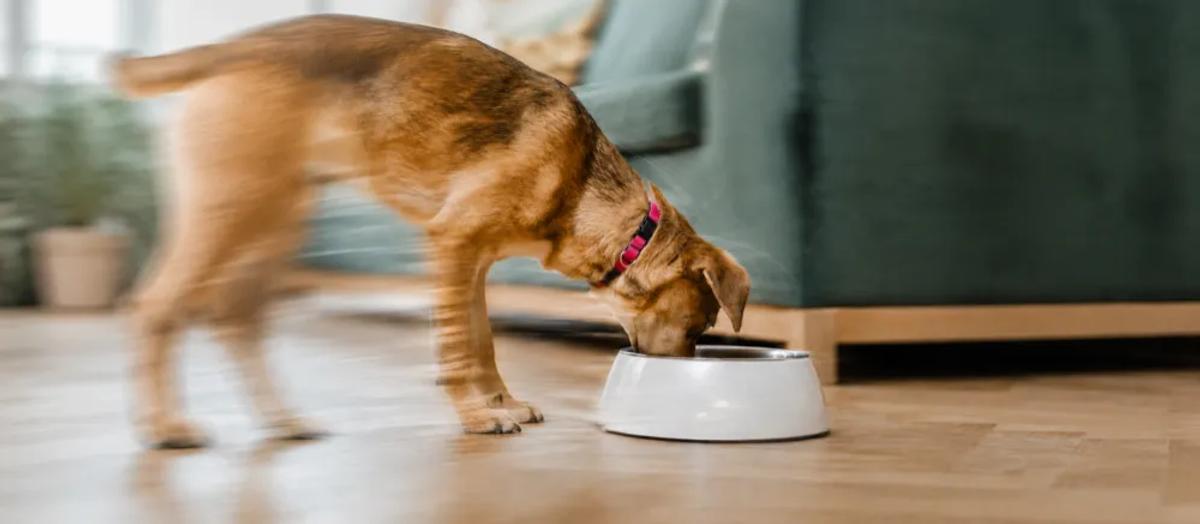
Dogs can eat a lot of everyday food, as long as most of what they eat is a complete and balanced dog food and the extras stay small. The catch is that a few things in an ordinary Indian kitchen are genuinely dangerous, onion and garlic among them, and those are the ones worth knowing cold. Most of the rest comes down to moderation and keeping things plain. Get those two ideas right, the safe base and the short list to avoid, and you have covered almost every food question that comes up day to day.
Start with the base, not the bits on top
Most of what your dog eats should be one thing: a food that is complete and balanced for their life stage. The World Small Animal Veterinary Association (WSAVA), the global body vets look to on nutrition, describes that as a diet "that provides all nutrients essential in the correct amounts and proportions" for the animal's species and life stage. Think of that food as the 90 percent. Whatever you add on top, a bit of fruit or a spoon of curd, is the other 10 percent, and vets suggest keeping treats and extras to about that share of the day's calories.
A dog living mainly on your leftovers, however lovingly cooked, usually is not getting a balanced diet, even when every single ingredient looks healthy. Keep the base solid and the extras stay harmless. Get it wrong, and piling on "healthy" human food will not close the gap.
Everyday foods that are usually fine
For most healthy adult dogs, plenty of plain, everyday food is okay in small amounts:
- Plain cooked rice, plain boiled chicken, plain boiled or scrambled egg, all cooked and bland with no masala.
- A spoon of plain curd (dahi). Many dogs handle curd better than they handle plain milk.
- Some fruit and vegetables, like banana, apple with the seeds and core removed, watermelon without rind or seeds, or cooked pumpkin, carrot and beans.
The method matters more than the list. Bring in one new food at a time, in a small amount, and give it a day. If your dog's stool stays normal and there is no vomiting, it agreed with them, and if not, you have learned something and you stop. Keep everything plain: no salt, no oil, and nothing cooked in an onion-garlic base. There are fuller guides on which fruits are safe and how to serve them and on eggs, curd and cheese if you want to go deeper.
Vegetables are an easy win here. A little plain cooked pumpkin, carrot, green beans or bottle gourd (lauki) adds fibre and bulk without much fat or sugar, which makes them useful if your dog is a bit overweight and always acting hungry. A spoonful stirred into dinner helps them feel full on fewer calories. Keep them plain and cut small, the same as everything else.
Foods to never feed
Some foods are not "a little is fine" foods. They can harm a dog even in small amounts, and a few can be fatal:
- Chocolate
- Grapes, raisins and currants (kishmish)
- Onion and garlic, raw or cooked
- Xylitol, a sweetener found in some sugar-free gums, mints and diet sweets
- Macadamia nuts, caffeine (chai and coffee), alcohol, and raw bread or pizza dough
The United States Food and Drug Administration's veterinary centre lists all of these among the edible items that are hazardous to pets. The awkward part in an Indian home is that two of them, onion and garlic, are the base of almost everything we cook. That single fact is the biggest reason a bowl of last night's sabzi or biryani is a poor idea, however much your dog wants it. The full guide to toxic foods covers what each one does and how to act if your dog gets to something they should not.
The Indian kitchen
A lot of what makes our food ours is exactly what makes it wrong for a dog. The onion-garlic-ginger base, the salt, the oil, the chillies and garam masala have no business in a dog's bowl, and some of it is actively harmful. Sweets are their own trap: chocolate is toxic, and plenty of mithai carries both heavy sugar and dry fruit like raisins.
This is also why a plate of leftovers is not a diet. Set aside the dangerous ingredients for a second, and a scoop of rice and dal or a couple of rotis is still not a balanced meal for a dog. It is mostly carbohydrate, with too little of the protein, fat, calcium and other nutrients they actually need. Feeding home food well is very possible, but it takes a proper recipe rather than whatever is left in the kadai, and that has a guide of its own.
How much to feed
There is no single number, because it depends on your dog's size, age and how active they are. The label on a packaged food is only a rough guide; it is built for an average dog, and yours may need a little more or less. The better guide is your dog's own body. Vets score body condition on a nine-point scale, and the aim is a 4 or 5 out of 9: you should be able to feel the ribs without pressing hard, and see a waist when you look down from above. If your dog drifts heavier than that, trim the portions a little. If they slip below it, add a little. Check every couple of weeks and adjust slowly rather than in big jumps.
Treats fit inside this same picture. Biscuits, chews and the scraps off your plate all come out of that same 10 percent share. If training means lots of little rewards, use part of the day's regular food as the reward and take it out of dinner, so the total does not creep up without you noticing.
Puppies, adult dogs and older dogs
Life stage changes the answer. Puppies grow fast and need more frequent, smaller meals through the day, plus a food made specifically for growth, because getting a puppy's nutrition wrong has bigger consequences than in a grown dog. Most adult dogs settle into a steady routine of a couple of meals a day on an adult food. Older dogs often need less energy as they slow down, but sometimes more support in other ways, so a senior dog putting on or losing weight is worth a word with your vet rather than a guess at the bowl.
Do not forget water
In an Indian summer this matters as much as any single food. Dogs rely on panting to cool themselves rather than sweating the way we do, which means they can dehydrate quickly in the heat, and a dehydrated dog is more likely to go off its food. Keep clean water within reach and refresh it through the day. When the heat peaks, put out a second bowl. Foods with high water content, like watermelon in moderation, help a little, but nothing replaces a full water bowl.
Packaged food or home food?
Both can work. What actually matters is whether the diet is complete and balanced. A packaged food built to a recognised nutrient standard, such as AAFCO abroad or the voluntary BIS standard IS 11968 in India, is formulated to be complete for a given life stage. Home food can absolutely get there too, but only with a recipe built for the purpose, which is a different thing from cooking extra and sharing it. If you want to go the home route, the homemade food guide is the place to start.
One last piece of the picture: food is only half of preventive care. The other half is keeping your dog's vaccinations and health records current. Together, those two cover most of what keeps a dog well over the years.
Frequently asked questions
What human foods can dogs eat?
Plain, cooked, unseasoned versions of a lot of foods: rice, boiled chicken or egg, plain curd, and certain fruits and vegetables in small amounts. The operative word is plain, with no salt, oil, or onion-garlic base. Keep these to roughly 10 percent of the day's calories.
What foods should dogs never eat?
Chocolate, grapes and raisins, onion and garlic, xylitol (a sugar-free sweetener), macadamia nuts, caffeine, alcohol, and raw dough. The FDA lists all of these as hazardous to pets. Onion and garlic are the ones to watch most closely in an Indian kitchen, since they are in almost everything.
Can dogs eat rice?
Yes. Plain cooked rice is fine and gentle on the stomach, which is why it often turns up in bland meals for a dog recovering from a tummy upset. On its own, though, rice is not a meal. It is mostly carbohydrate, so it works best as one part of a balanced meal.
Can I give my dog roti?
A plain roti in a small amount will not hurt most dogs. But it is the same story as rice, and rotis often carry salt or ghee on top. A bite as a treat won't hurt. Living on rotis would leave real gaps in the diet.
Is curd okay for dogs?
For most dogs, a small amount of plain curd is fine, and it is often easier to digest than milk. Skip it if your dog gets loose stools from dairy, and keep it plain, with no sugar and no masala chaas.
The bottom line
Feed a complete and balanced food as the base and keep the extras plain and small. Learn the never-feed list, with onion and garlic right at the top of it for an Indian home, and let your dog's own waistline guide how much to feed, treating the number on the bag as a loose starting point. That covers almost every "can my dog eat this?" moment you will run into.
If you would rather not hold it all in your head, this is part of what Nuzzy's PetLife is for: a simple place to log your dog's weight and what you feed, so you can see whether the portions are landing right and catch it early if the weight starts to creep.
Sources
WSAVA Global Nutrition Guidelines. World Small Animal Veterinary Association, Global Nutrition Committee (complete and balanced diet; treats about 10 percent of daily calories; body condition scoring, 4-5 of 9 as ideal).
Potentially Dangerous Items for Your Pet. U.S. Food and Drug Administration, Center for Veterinary Medicine (chocolate, grapes and raisins, onion, garlic, xylitol, macadamia nuts, caffeine, alcohol, raw dough).