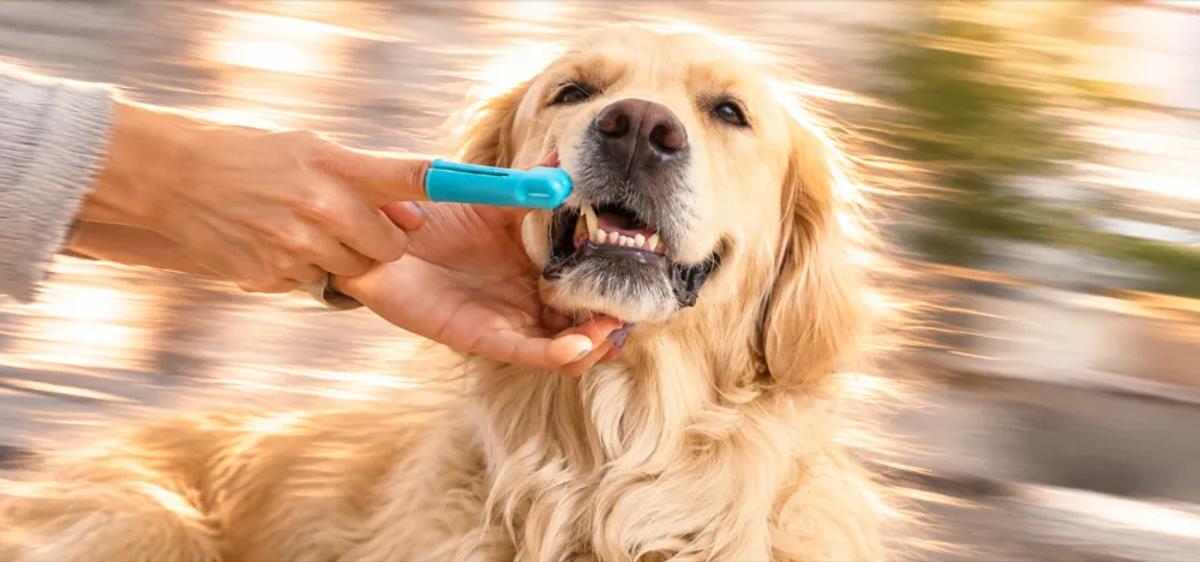
To brush your dog's teeth, introduce mouth handling gradually, use a suitably sized soft brush and work gently along the gumline on the accessible outer tooth surfaces. Daily brushing is the ideal goal, but a painful or inflamed mouth needs veterinary advice before you persist. Brushing is the most effective method of home plaque control.
You can build the routine around what your dog currently accepts. The wider guide to dog dental care in India explains how brushing fits with veterinary examinations and treatment, including care that brushing cannot provide.
Before you start
Ask your vet about brushing if your dog has mouth discomfort, inflamed gums or difficulty accepting handling. Dental pain can affect behaviour, and brushing an already inflamed mouth can add to discomfort. Tell the vet what you have tried and where your dog began to resist before repeating the attempt.
Go slowly. Handling close to the mouth carries a bite risk, and forcing home care is counterproductive. If you cannot handle your dog comfortably and safely, stop the attempt. Ask the vet to show you what you can try with your own dog.
Ask for a demonstration at the clinic. If you are unsure where to hold the brush or how to reach the outer teeth, say so before leaving. Ask the vet to explain the movement again if you need to see it a second time.
Choosing a brush and toothpaste
Choose a soft toothbrush with a size suited to your dog. A soft human toothbrush is also an option under the dental guidance. Ask the clinic to show you what would fit, especially if you are unsure how easily the brush will reach the outer tooth surfaces.
Use veterinary toothpaste, and avoid human toothpaste. The brush's movement removes plaque, while veterinary paste can help acceptance; the brushing advice also recommends a veterinary paste. Bring your equipment to the appointment if you want the vet to check it, or ask what to look for before buying it.
Introducing the brush
Start with comfortable lip handling
Begin with a small amount of handling around the outside of the lips, followed by a reward your dog enjoys. Progress gradually as the handling becomes comfortable, using the lip-handling introduction as your starting point. The reward can be food or play. Ask your vet for help if you cannot do this safely.
For now, work on the handling your dog accepts. The introduction takes you towards brushing, but there is no fixed number of days for reaching each step. If an attempt becomes difficult, explain what happened to your vet before pushing further.
Let your dog accept the brush
Introduce the brush gently once the earlier handling is accepted. Veterinary toothpaste can help make the brush more acceptable, and you can add the brush gradually within that progression. Keep using slow introduction and rewards; you don't have to complete a full brushing session during an early attempt.
You can ask the vet to watch your technique if you are unsure about this transition. Explain whether the difficulty begins when you touch the lips, bring the brush near the mouth or start brushing.
Brush gently along the outer gumline
Hold the brush at about 45 degrees to the length of the tooth, at the gum margin, and use gentle circular movement. Begin with the accessible outer tooth surfaces while the mouth remains closed. The brushing walkthrough also builds towards brushing along the outsides of the teeth. Ask the vet to demonstrate the angle if the written instruction is hard to picture.
Do not force the mouth open when introducing brushing, because this may increase resistance. If you cannot reach an area comfortably, ask your vet to demonstrate how to proceed with your dog. Explain which area was difficult and what happened when you tried.
Making brushing a routine
Once a day is the ideal target, supported by the advice on daily home care. Work towards it through gradual introduction, rewards and consistency. Pay attention to what your dog currently accepts so you can explain any difficulty at the next visit.
Choose a household reminder that you can use consistently, such as a note beside the brush or an entry in your own calendar. If more than one person helps with your dog's care, agree who will offer the brushing practice. Put the brush where that person will remember it.
For broader context about reward-based handling, read the dog training guide. Keep the dental technique itself grounded in the demonstration and advice you receive from the clinic.

If your dog resists
Stop if you cannot continue safely. Pain can affect behaviour during handling, and brushing inflamed gums can add to discomfort. A dog pulling away needs you to pause and seek advice before pressing on. Tell the vet when the difficulty begins, even if you have noticed no other change.
Tell the vet about visible redness or bleeding, and about any change in eating or willingness to have the mouth touched. These changes appear in the dental-pain guidance and symptom guide. The article on gum disease in dogs explains what a vet examines when these changes occur.
Common questions
What can I do if my dog refuses toothbrushing?
Stop the attempt if you cannot continue safely, and ask your vet about gradual handling. Slow introduction and rewards can help acceptance, while brushing inflamed gums may add discomfort. Ask the vet to assess your dog's mouth before continuing, and describe the point at which your dog begins to resist.
Can I clean my dog's teeth naturally?
The mechanical action of brushing removes plaque, and home-care advice supports brushing as the most effective home method. Use a suitable brush and veterinary toothpaste. If you are considering a home recipe, discuss it with your vet before trying it, and ask for help introducing the brush safely.
Keep the care plan together
Use PetLife to keep track of the vet visits that inform your dog's home-care plan. You can return to the dog dental care guide when preparing questions about how brushing and professional care fit together.