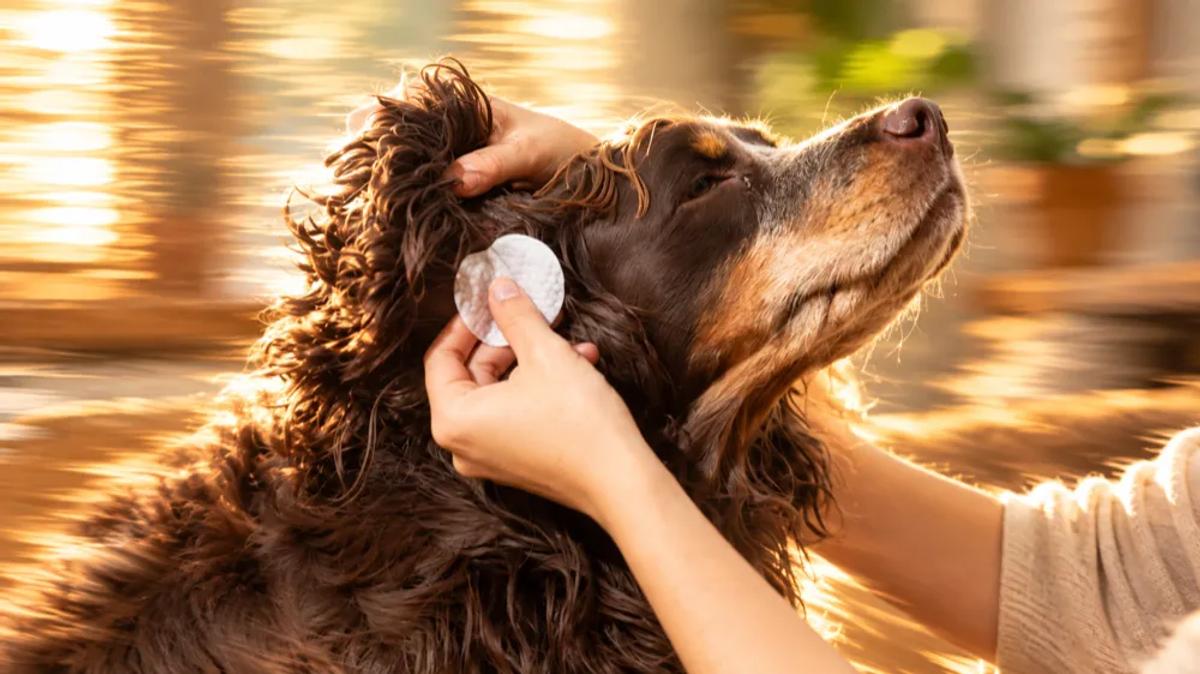
Clean your dog's ears gently with an appropriate ear cleaner, then massage the base, allow head shaking and wipe away accessible debris with cotton pads or balls. Avoid cotton swabs and cleaners containing alcohol or hydrogen peroxide. Stop if cleaning is painful and ask your vet for advice.
Keep the cleaner and cotton pads ready only after you know that cleaning is appropriate. Ask the vet which cleaner and method fit your dog's situation.
Check whether cleaning is appropriate
For a dog with healthy, normal ears, routine cleaning is needed when you notice dirt or debris. Cleaning too often can irritate the ears. An ear check does not have to lead to a cleaning session every time.
Look for redness, itching, head shaking, discharge, increased wax, odour or discomfort when you touch the ear. Discuss those changes with your vet. They can occur with different ear problems, including allergic ear disease without an infection, so they do not establish a diagnosis by themselves.
Tell the clinic what you can actually observe. You can describe a change in smell, more wax than usual or a dog who has begun pulling away when the ear is touched. You don't need to name the condition before asking for help.
If touching or cleaning the ear appears painful, stop and seek advice before trying again. Ask whether the vet wants to examine the ear before you continue at home.
Choose supplies and prepare
Ask your vet about the cleaner that suits your dog's needs and have them show you how to use it. Prepare cotton pads or cotton balls and a towel. Avoid solutions containing alcohol or hydrogen peroxide.
Practise gentle ear handling when your dog is relaxed, with rewards and a short session. Introduce the handling gradually before you try to complete a cleaning. The wider guide to preparing for grooming at home explains how to build that preparation around your dog's response.
Bring the cleaner you already have to the appointment if you want it checked. Ask the vet to demonstrate with the supplies you will use at home. Point out anything that differs from the equipment they are showing you.
Have the towel ready for the mess from the cleaning solution. Keep the handling gentle throughout and offer rewards your dog enjoys.
Clean gently
Apply the cleaner
Apply ear-cleaning solution to fill the ear canal, using the method your vet has demonstrated. If your dog does not tolerate solution being applied directly, cotton pads or balls saturated with the cleaner are an alternative.
Use that alternative only while handling remains comfortable. If your dog appears painful or distressed, stop. A different way of applying cleaner does not remove the need to pause when the attempt is going badly.
Massage and allow shaking
Gently massage the base of the ear. When you stop massaging, your dog will likely shake their head, which helps loosen debris. Keep the towel nearby for the solution that comes out.
Wipe accessible debris
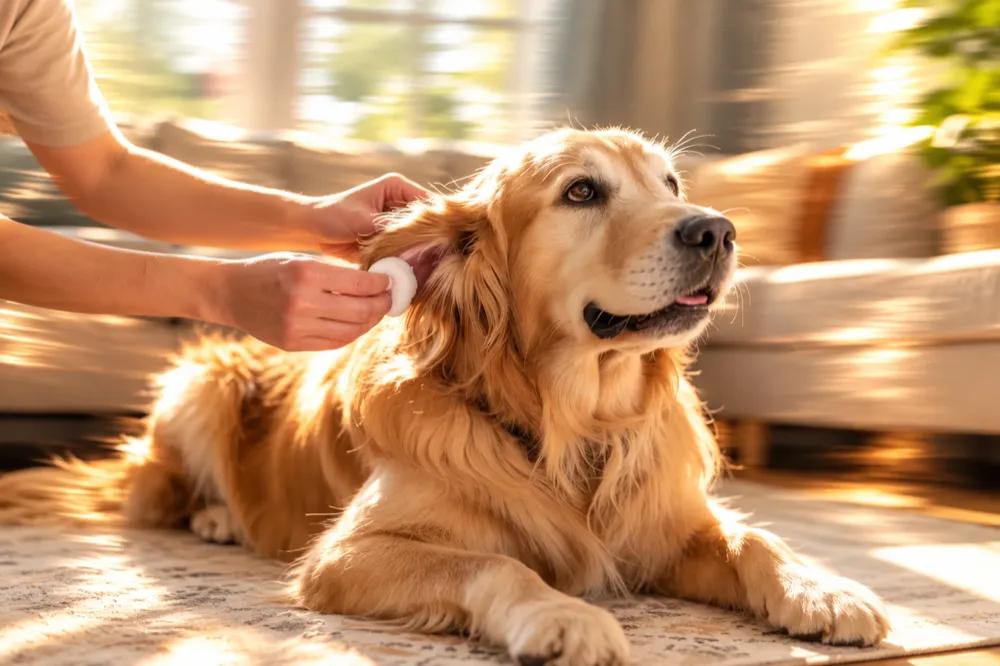
Use cotton pads or balls to wipe away debris gently, moving towards the outer ear flap. Wipe only where your finger can easily fit, roughly to the first knuckle, and never push deeper to reach material you cannot easily access.
Avoid cotton swabs, which can push debris further into the ear canal. If you are unsure where the accessible area ends, ask your vet to show you on your dog before you attempt the wiping.
Stop if any part of cleaning seems painful. Contact the clinic and explain which movement brought the reaction.
Decide how often to clean
Frequency depends on why the ears are being cleaned. A vet may give an individual plan for treatment or ongoing care. Do not turn that plan into a schedule for another dog.
Healthy, normal ears need routine cleaning when dirt or debris is present, and overcleaning can irritate them. Ears that get wet, including after bathing or swimming, may need routine cleaning too. Discuss how that situation fits your dog's care.
If wet ears often follow bath time, the guide to planning your dog's baths can help you review the bathing part of the routine.
Write down the ear-care instructions separately so everyone helping knows when they apply. If you forget part of the plan, ask the clinic to clarify it. Bring any difficulty you have following the instructions to their attention.
Stop if there is discomfort
Pain is a reason to stop cleaning and consult your vet. Freezing or pulling away also calls for a pause and a smaller handling step later. Seek advice about concerning changes rather than persisting with an uncomfortable attempt.
Report the signs you have noticed, including redness, itching, head shaking, discharge, wax changes or odour. Explain whether the discomfort was present before cleaning began. The vet can assess what those signs mean for your dog.
You can note whether the change involves one ear or both, and when you first noticed it. Bring that information and the cleaner you have been using to the appointment. Ask which instructions to follow before making another attempt at home.
Common questions
How often should I clean my dog's ears?
For healthy, normal ears, routine cleaning is needed when dirt or debris is present. Ears that get wet after bathing or swimming may also need cleaning. Too much cleaning can irritate the ears. If your dog has an ear problem or an individual treatment plan, ask your vet which instructions to follow.
Can I use hydrogen peroxide to clean my dog's ears?
Avoid hydrogen peroxide and cleaners containing alcohol. Ask your vet which ear cleaner fits your dog's needs and how to use it. If the ear is painful or shows concerning changes, stop the cleaning attempt and contact the clinic before trying another solution.
Keep the visit history
Keep the vet visits that inform your dog's ear-care plan in PetLife, and bring the records your clinic requests to follow-up appointments.