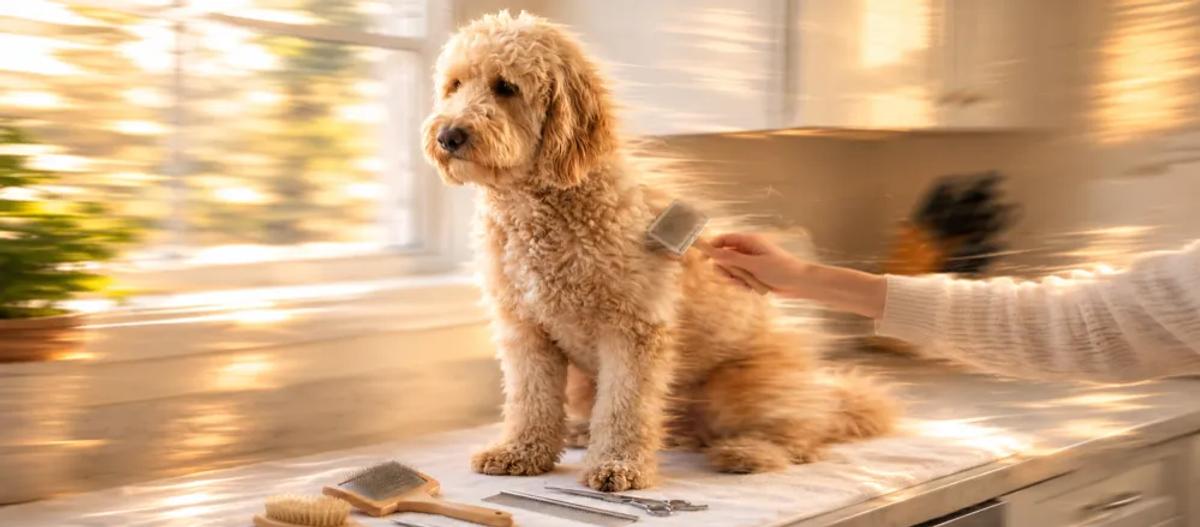
Home dog grooming starts with checking the coat and skin, then choosing the brushing, bathing, nail and ear care your dog needs. Introduce the brush, nail tool and ear handling gradually, with rewards and room to pause. Ask your vet about the right care intervals and get help with any task you cannot do comfortably.
You don't have to finish everything in one sitting. A dog who freezes, pulls away or becomes uncomfortable needs a break. Pain, skin changes and other concerning signs need veterinary advice before you press on with the routine.
Plan a routine for your dog
Start by looking at the dog in front of you. Coat and skin care should reflect the individual animal, including the coat's needs, rather than a timetable copied from another household. Regular checks let you notice matting, hair loss, injuries or parasites and bring abnormalities to your vet's attention.
Ask your vet which tasks belong in your dog's routine and how often to do them. Brushing, bathing and trimming can all form part of care, but unnecessary bathing can harm the skin or coat. A calendar reminder is useful only when it reflects the plan you have agreed for your dog.
Keep a short household note of that plan. Write down who will offer brushing, which tools you have been shown how to use and what you still need to ask at the clinic. If more than one family member helps, keep the instructions somewhere everyone can find them.
You could organise the note around a few practical questions:
- Which part of the routine have we been shown?
- Which tool should we use for this dog's coat or nails?
- What change should prompt a call to the vet?
- Who will bring our questions to the next appointment?
Leave room for practice as well as grooming. Getting comfortable with a tool can be a session of its own, before that tool touches a nail or moves through the coat. Stop while the practice is still going well.
Prepare for comfortable handling
Introduce tools
Let your dog investigate the brush or clippers at their own pace. Pair the tool with small rewards before using it, and practise gentle handling of paws and ears when your dog is relaxed. Keep these sessions short and predictable.
Change one part of the task at a time. For example, start with the handling your dog accepts before adding the tool. If the next step brings pulling away or tension, pause and return to something easier during a later practice session. Progress depends on your dog's response.
This approach uses choice and rewards to help a dog participate in handling. Force and restraint can cause fear and stress. For a fuller explanation of the learning behind this approach, the guide to reward-based dog training covers the wider training context.
Recognise a pause
Watch for freezing, pulling away, lip licking, showing the whites of the eyes or yawning when your dog isn't tired. These can be early signs of stress. Read them in the situation rather than treating a single movement as a complete explanation of how your dog feels.
Pause when your dog shows stress. Offer a break and make the next attempt smaller. If you notice pain or other concerning changes, seek veterinary advice. Finishing a particular paw or section of coat can wait.
Tell anyone helping with grooming what you have noticed. Be specific about the moment that became difficult: touching the paw, picking up the clippers or beginning the brushing movement. Those details give the professional something concrete to discuss with you.
Brush and check the coat
Choose the brush
Ask your vet or groomer which brush or comb suits your dog's coat. Bring the tool you already own if you want them to check it. Regular brushing helps manage loose hair and prevent matting, but the tool and handling need to fit the coat you are working through.
Use brushing as a chance to look at the skin as well as the hair. Notice mats, patches of missing fur, injuries or anything else that looks different. A coat that needs help beyond what you can comfortably manage is a reason to ask a professional to show you the next step.
Ask for a demonstration on the areas you find difficult. A recommendation to buy a brush leaves a practical question unanswered if you still don't know how to use it on your own dog. Watch the movement, then ask whether you can try it while the professional observes.
Notice changes
Loose hair and a patch of missing fur are different observations to report. Brushing can help manage loose coat, while an abnormality in the skin or coat should be examined by a vet. The guide to managing dog shedding explains the distinction and the changes worth discussing.
If you notice a parasite or an area of injured skin, ask your vet about it. Keep the observation separate from your guess about its cause. Skin and coat abnormalities need appropriate veterinary advice; they do not become a reason to start a home treatment recipe.
Write down where you noticed the change and what it looked like. You can bring those observations to the appointment without having to name the condition yourself.
Plan bath time
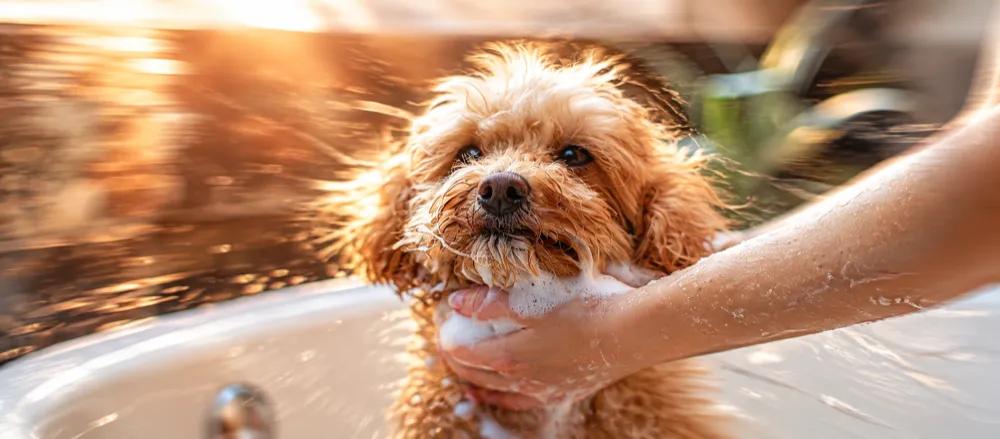
Choose the bathing interval with your vet. Different dogs have different coat-care needs, and bathing more often than needed can harm the skin or coat. A daily or weekly slot on the family calendar should not decide the frequency by itself.
Prepare for the handling as well as the washing. Let your dog investigate the bathing area at their own pace, and practise the parts of the process that can be introduced comfortably. If your dog is already pulling away or freezing, pause before continuing.
Put the things you plan to use within reach and agree who is helping before you begin. Keep the vet's instructions with the bathing supplies if there is anything you want to check again. Ask about an instruction you do not understand while you are still preparing.
The guide to how often to bathe your dog covers the individual frequency decision and a fuller bath walkthrough. Use it alongside the advice given for your dog, especially when you are deciding whether another bath is needed.
Care for nails
Ask your vet or groomer which nail tool to use and how to use it on your dog. Practise relaxed paw handling and introduce the tool with rewards before attempting the trimming. Being able to pick up the tool is only one part of learning the task.
During a demonstration, ask the professional to show you the area they intend to trim. Say when you cannot see what they are pointing to. Ask to watch again before trying it yourself, particularly if the written description and the nail in front of you do not seem to match.
Your dog's response still sets the pace. If handling becomes difficult, stop and plan a smaller practice step. Do not turn a partly completed session into a reason to keep going through signs of stress.
The separate guide to cutting your dog's nails at home explains the preparation and conservative trimming limits. Use a demonstration to connect that guidance to your own dog's nails.
Check the ears
Look for changes when checking the ears. Redness, itching, head shaking, discharge, increased wax, odour or discomfort when touched are reasons to discuss the ears with a vet. These signs can occur with different ear problems, so appearance or smell alone does not identify the cause.
For healthy, normal ears, cleaning is needed when dirt or debris is present. Overcleaning can irritate the ears. Ears that become wet after bathing or swimming may also need routine cleaning, with suitable supplies and handling.
If cleaning seems painful, stop and contact your vet. Ask for advice before making another attempt. Tell the clinic whether discomfort began when you touched the ear, applied cleaner or started wiping.
The guide to cleaning your dog's ears explains the method and its limits. It also covers choosing a cleaner and how to approach the frequency question without making every ear check a cleaning session.
Include toothbrushing in your plan
If you are also planning to introduce toothbrushing, use the separate guide on how to brush your dog's teeth. It takes you through that task in its own right, including the introduction, supplies and questions to ask at the clinic.
Decide when to ask for help
Ask a vet to assess skin or coat abnormalities, including injuries, hair loss or changes that concern you. Increased or severe itching also needs veterinary attention, particularly when it is painful. Treatment should follow veterinary advice.
Pain or concerning changes during handling deserve the same attention. Explain what your dog did and when it began. Avoid repeating the difficult part simply to show that the reaction happens again.
For grooming work you cannot comfortably manage, look for someone who respects your dog's comfort and communicates clearly. Explain the handling that has gone well and the points at which your dog needs a break.
Ask how they will respond if your dog pulls away. Ask what they will show you to practise at home, and which concerns they would want a vet to assess first. You can make those questions part of the call before arranging an appointment.
Bring the tools or written instructions you want checked. A demonstration is most useful when it answers the practical problem you actually have, such as where to begin brushing or how to hold the nail tool you own. Ask the person showing you to slow down if you need another look.
Choose someone whose explanation you can follow and whose handling respects your dog's comfort. Keep their advice with the family care plan so everyone helping can refer to the same instructions.
Common questions
How do I groom my dog step by step?
Start by checking the coat and skin, then choose the care your dog needs within the plan discussed with your vet. Introduce handling and tools gradually with rewards, and keep sessions short. Ask for a demonstration of tasks you have not learned. Pause at signs of stress and seek veterinary advice for abnormalities or pain. You can split the routine into separate comfortable sessions.
Choose your next step
If you need help with part of the routine, use PetMap to explore grooming options and ask how the groomer handles a dog who needs breaks. Take the questions from your home-care notes to that conversation.
Sources
- Cornell Riney Canine Health Center: Grooming and cooperative care.
- Cornell University College of Veterinary Medicine: How to clean your dog’s ears.
- AAHA: Why does my pet shed?.
- ASPCA: Dog grooming tips.
- Washington State University Veterinary Teaching Hospital: How to clip a dog’s nails.
- WSAVA: Principles of Wellness.