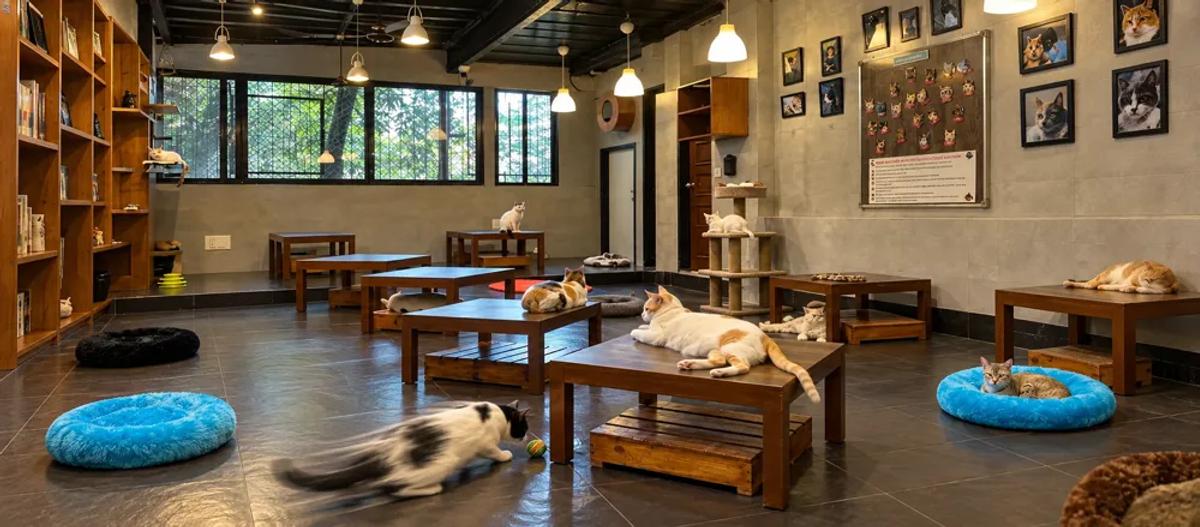
Cat boarding, as discussed here, is an overnight stay in accommodation away from your cat's home. Confirm the actual unit your cat would use and the care arrangement that comes with it. The broader guide helps you compare pet care arrangements if you are also considering someone coming to your home.
Visit the cattery before booking. Ask to see the doors, resting places and feeding area, then discuss how staff would care for your individual cat. A tour is a chance to ask about the unit you are being offered.
Check individual accommodation and access
Inspect the cat accommodation for holes or gaps and ask how its doors open into a secure area. Have staff show you the route into the unit. Include the doors that people use when feeding or cleaning, so the discussion covers how the accommodation is accessed during care.
Ask for individual housing. If you hope cats from your household can stay together, explain whether they already get along and are socially bonded. Discuss sharing only in that context, with a plan for separating them if problems arise. Cats arriving from different households should not be treated as prospective roommates in this discussion.
A shared booking still needs an explicit housing agreement. Tell the provider which cats you are bringing and ask how the proposed unit would be used. If separation were needed, have staff explain where each cat would stay and how they would communicate that change to you.
Look at the actual unit. If the tour shows a different one, ask which accommodation is proposed for your dates before treating what you saw as the booking you have agreed.
Look for usable resting and toileting spaces
Ask where your cat can hide or rest away from interaction. Have staff show you the retreat and explain how the cat can reach it. Keep the conversation about the options available to this cat, without assuming that a feature described as a hiding place will fit every individual.
Look at any raised areas and ask whether your cat can access them. Mention mobility limitations when discussing the accommodation. The useful question is how your cat would use the space, including reaching a resting place, rather than how many features appear in a photograph.
Ask how the feeding and resting areas are separated from the litter area. Have staff show you their positions within the proposed unit.
If you are considering a shared stay for household cats, discuss the resources within that arrangement too. Keep any need for separate accommodation part of the same conversation, so you understand the alternative if sharing cannot continue.
Ask how staff handle contact
Ask how a cat can avoid handling when it does not want interaction. Discuss whether staff allow the cat to retreat and how they respond when it moves away. You can describe your cat's familiar preferences without asking staff to make it accept a different style of contact.
Our guide to reading cat body language offers wider reading on interactions and letting contact end. Use the care discussion to explain what your cat already prefers. Avoid reducing that account to a label that leaves the person taking over unsure what you mean.
For example, you can explain where your cat normally chooses to rest and how it usually approaches you. Those are details about your own cat to supply, not a prediction that it will behave identically during the stay.
Explain the usual food and routine
Discuss your cat's usual food and confirm the feeding arrangement. Ask whether you need to supply it and give the instructions that go with the actual food. If more than one family member normally feeds the cat, bring their parts of the routine into the handover.
Keep your cat's feeding amounts clear when passing on the existing plan. The linked guide covers portion planning if you need to revisit that separately. A boarding handover should identify what has already been agreed, without quietly substituting a new feeding plan.
Ask how staff keep track of eating and toileting, and how they communicate changes. Have them explain what information you would receive and who would contact you.

Agree contacts and the handover
Leave your contact details and, where relevant, name someone you trust to be contacted about veterinary decisions while you are away. Include the applicable veterinary and out-of-hours contacts. Discuss how the carer should reach you and the nominated person.
Ask where cats would be housed if the premises became unusable. Let the provider explain its own relocation plan. Keep that answer with the other arrangements for the stay, without assuming that another unit or facility will always be available.
If you are still considering care in your cat's home, compare that arrangement before settling the booking. Otherwise, shortlist a boarding place through PetMap, then visit and ask how it would accommodate your cat. Take the routine and the questions that remain unanswered.
Questions about cat boarding
What is cat boarding?
The arrangement covered here is an overnight stay in cat accommodation away from home. Confirm the individual housing and care that the provider is offering. In-home sitting keeps care at your home, with attendance agreed separately; compare those practical details if both options are under consideration.