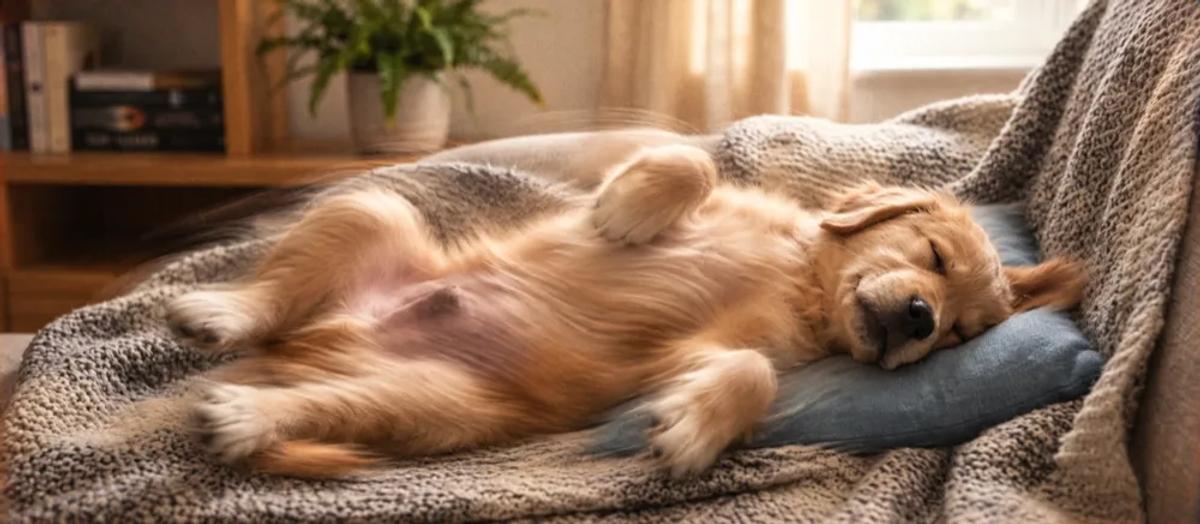
Dogs sleep on their sides, curled up, on their backs and with their heads propped up. These are observed positions, and a position alone cannot tell you whether your dog is ill. A familiar shape on the dog bed needs to be read alongside what else is happening.
In a 2020 study of young dogs, pet parents could select several sleeping positions for the same dog. That is a useful starting point when you notice your dog changing pose. The categories describe what people saw.
Common sleeping positions
On the side
A dog lying on its side was one of the positions reported in the study. Describe the posture as you see it, without turning it into a claim about trust or the depth of sleep. The questionnaire did not measure either of those things through sleeping position.
Curled up
The curled-up position was another reported shape. It can look quite different from lying stretched out, but the study allowed both to be recorded for one dog. The questionnaire did not assess personality.
On the back
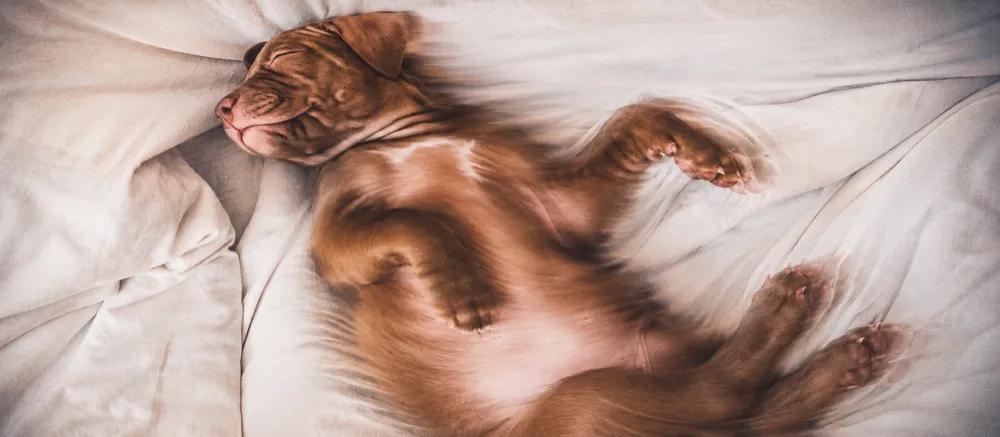
Sleeping on the back also appeared among the reported positions. The questionnaire did not establish what this posture means emotionally.
Head propped up
Pet parents also reported dogs sleeping with the head propped up, for example against the edge of a bed. Keep that description separate from a treatment recommendation. Research does not establish that arranging a support for the head will solve a breathing problem during sleep.
Read the position in context
An observation has limits. You might only see the pose your dog uses when you happen to walk past, and a quietly resting dog can look asleep. A description of one moment cannot represent every nap or the whole night.
For the broader picture, consider your dog's sleep pattern. A change of position can be something you mention when discussing a concern, but a posture alone cannot establish the cause. Avoid choosing an illness from an online position chart.
When breathing changes the picture
A 2024 study looked at dogs' sleep-related breathing and reports of unusual sleeping positions. Sitting up or sleeping with something in the mouth appeared more often in some groups with breathing problems. These behaviours also occurred in dogs without the same measured problem, so they were not exclusive signs of disturbed breathing.
Short-muzzled dogs can have airway abnormalities that obstruct airflow. The amount of snoring does not reliably show severity within this group, which is why snoring and breathing during sleep need their own assessment. Don't put an object in your dog's mouth or use a position change as a home remedy.
Get urgent veterinary help if your dog has difficulty breathing. Blue gums, marked abdominal effort while breathing, or weakness or collapse are concerning signs. Any sign of respiratory distress is enough to act on. You do not need to see several signs together.
Observe without choosing a diagnosis
If a position change concerns you, write a brief description of what you saw and whether you actually saw your dog asleep. Leave anything you did not observe uncertain. Share that description with your vet.
Keep separate observations separate. A different posture and small movements during sleep raise different questions, and the movement guide covers that second concern. Describe any breathing change directly to your vet instead of asking the sleeping position to explain it.
Frequently asked questions
What do dog sleeping positions mean?
They describe how a dog is lying. The studies discussed here do not assign emotional or personality meanings to those shapes. Some positions have appeared in sleep-breathing research, but their presence alone cannot diagnose a problem.
Can a sleeping position tell me my dog is sick?
A single position cannot establish illness. Breathing difficulty needs immediate veterinary care whatever position your dog is in. If you are concerned about a change without an emergency sign, describe the change and any accompanying breathing observations to your vet.
Sources
- Kinsman et al. (2020), Animals: Sleep duration and behaviours in dogs up to 12 months of age
- Niinikoski et al. (2024), Journal of Veterinary Internal Medicine: Risk factors for sleep-disordered breathing in dogs
- Tooley and Heath (2022), Animals: Sleep characteristics in dogs; effect on caregiver-reported problem behaviours
- Niinikoski et al. (2023), Journal of Veterinary Internal Medicine: Description of a novel method for detection of sleep-disordered breathing in brachycephalic dogs
- Cornell Riney Canine Health Center: Brachycephalic obstructive airway syndrome
- Cornell Riney Canine Health Center (updated March 2025): Recognizing and responding to canine respiratory distress
- Tufts Cummings School (2021): Sleeping with dogs