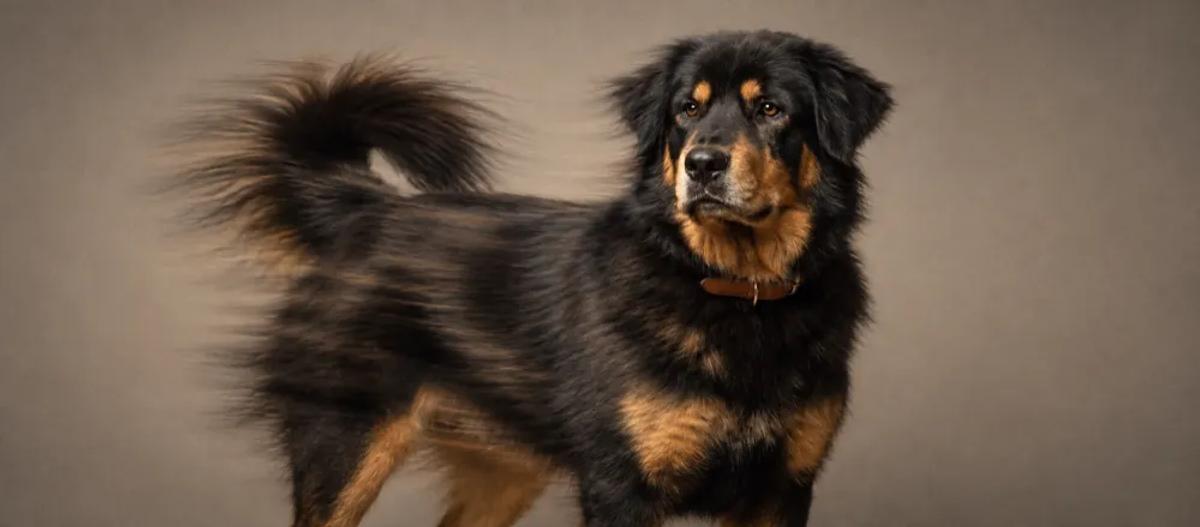
The Gaddi dog appears in India's current official breed register with Himachal Pradesh as its home tract. Everyday care needs to fit the individual dog: suitable food, comfortable rest, movement and mental activity all matter. The breed's listing provides a documented starting point, while its research history needs to be read within the limits of what the studies actually examined.
Gaddi in the current breed register
The official register checked in September 2026 lists Gaddi and names Himachal Pradesh as its home tract. That is the current listing used here. It does not determine the health, temperament or requirements of a particular dog.
The broader Indian dog breeds and their care guide includes Gaddi alongside Rajapalayam, Chippiparai and Mudhol Hound. It also distinguishes that selected group from the full list displayed in the register.
What the laboratory study measured
A 2025 study collected Gaddi blood samples in Palampur and Labrador Retriever samples in Ludhiana. Researchers isolated cells, cultured them and divided them into laboratory treatment groups alongside a control group. The experiment examined responses under those laboratory conditions.
That is different from following pet dogs through daily life and recording how often they become ill. It does not establish guaranteed disease resistance or show that a Gaddi needs less veterinary care.
The Mudhol genetic study examined genetic variation using samples from 50 dogs and 26 markers. That research design differs from the Gaddi cell experiment. Neither description provides a reason to rank the everyday health of the two breeds.
Arrange rest and daily activity
Begin with the environment the dog actually uses. A comfortable resting place, opportunities for toileting and movement, exploration, play and mental activity all belong in the care plan. Consider each separately so that one visible part of the routine does not stand in for everything the dog needs.
A quiet place to rest is worth planning as deliberately as an outing. Identify where the dog can settle and how that arrangement fits into the household's use of the space. Then consider where activity and exploration can happen. You’re considering the space your dog uses.
Discuss individual physical activity with your vet. The guide to planning everyday dog exercise offers more detail on activity and enrichment choices.
Think about opportunities as well as duration. Movement, play and exploration describe different experiences within a day, while quiet rest has its own place. A useful household discussion can identify which opportunities already exist and which part of the routine needs attention, without trying to copy another dog's timetable.
Use rewards to encourage the behaviours you want, and choose nonaversive handling and training. Be specific about the response you are recognising. If you are practising a familiar behaviour, reward that action when it happens instead of treating the interaction as a test of a personality label.
Rewarding experiences can be part of ordinary care as well as deliberate practice. Where family members share responsibilities, agree what each person will do. One person may arrange an activity while another manages a quieter part of the day. The arrangement should account for the dog's needs and be practical for the people carrying it out.
Review food and physical condition
Choose a complete, balanced diet suited to your dog's life stage and individual circumstances. Consider the food's nutrient profile and the amount offered together with physical condition and lifestyle. A breed-specific marketing label does not settle those questions, even if the name on the packaging seems familiar.
Body weight, body condition and muscle condition contribute different information to the nutritional assessment. Body condition concerns fat; muscle condition concerns muscle mass. Veterinary assessment includes looking and feeling as well as weighing. The dog's appearance alone cannot provide all of those findings.
Ask what the current assessment means for your dog's food and how it should be reviewed. The useful outcome is a plan for the individual animal.
Include all food sources when discussing intake. Main meals, treats, table food and anything offered by other people belong in the account. Explain who supplies food and how feeding is managed. The place where the dog eats can also be relevant to describing the existing routine.
For example, imagine that one family member serves the meals while another uses food during learning. An account based on meals alone would leave out the second person's contribution. Collecting both descriptions gives the veterinary team a fuller picture of what is actually offered, before deciding whether the plan needs changing.
Use reviews to revisit the food plan as the dog's condition or circumstances change. Keep the discussion connected to the assessment, including the diet and the way it is supplied.
Bring coat and behaviour changes to the care review
Check the skin and coat regularly for matting, missing fur, injuries and other abnormalities. Have concerning findings examined by a vet. Check the skin beneath the coat. You don’t have to identify the cause of a change before asking for an assessment.
Discuss the care interval appropriate for your dog's skin and coat, including the cleaning you already provide. Bathing too frequently can cause harm, so a universal calendar routine is not enough to decide when the next bath should happen. Ask for advice that considers the individual animal and the existing care.
Behaviour is another part of the veterinary review. If something concerns you, describe what the dog did and what was happening at the time. An account of the action and setting is more specific than labelling the dog protective, difficult or stubborn. The assessment can then consider the individual concern without treating the breed name as its explanation.
Keep a possible trigger separate from a confirmed cause. You might have noticed that a change occurred in a particular situation, but that observation alone does not settle why it happened. Bring the description to the veterinary team so that it can be considered alongside the rest of the dog's circumstances.
Regular check-ups review health and nutritional status, with a visit plan adapted to the dog. Weight, body condition and muscle condition can be considered together over time. Discuss what needs following up and when, especially if there is a concern to assess.
PetID can keep health records and medical documents together. Use it to retain the veterinary documents relevant to your dog's care, so earlier advice is available when another appointment or a care discussion is needed.
Frequently asked questions
Is the Gaddi dog listed in the current official breed registry?
The register checked in September 2026 lists Gaddi and gives Himachal Pradesh as its home tract. That entry supplies current registry information, without predicting an individual dog's health or behaviour.
What should I record when discussing my Gaddi dog's behaviour?
Describe what happened and the setting in which it occurred. Bring concerning changes to your vet for assessment, keeping any suspected trigger separate from a conclusion about the cause.
Sources
- ICAR-NBAGR. Geese, Duck & Dog Breeds of India. Dog registry checked September 2026.
- Kaur J et al. In-vitro transcriptomic profiling of indigenous Gaddi vis-à-vis exotic Labrador dogs: insights from systems biology. Frontiers in Veterinary Science, 2025.
- Freeman L et al. WSAVA Nutritional Assessment Guidelines. Journal of Feline Medicine and Surgery, 2011;13(7):516 to 525.
- Hammerle M et al. 2015 AAHA Canine and Feline Behavior Management Guidelines. Journal of the American Animal Hospital Association, 2015;51:205 to 221.
- Sowmyashree BL et al. Microsatellite DNA Polymorphism Studies in Mudhol Hound Dog Native of India. Indian Journal of Animal Research, 2022;56(7):848 to 853. First online 2021.
- WSAVA. Principles of Wellness. 2025.
- AAHA. Age-specific and Breed-specific Diets. Nutrition and Weight Management Guidelines, 2021.