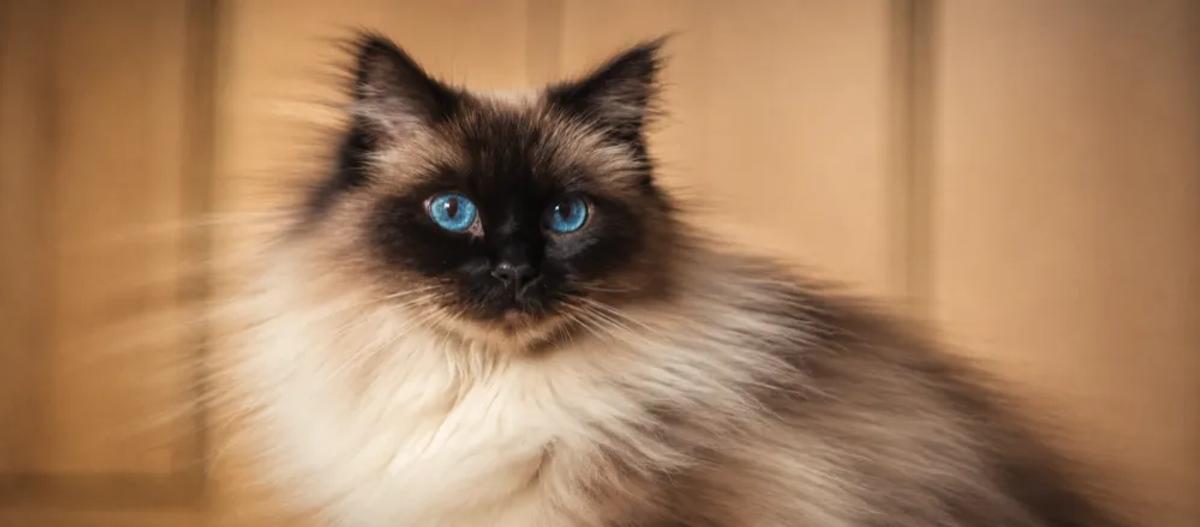
The Ragdoll’s physical profile describes a large cat with a broad chest, a muscular body and a semi-long coat. Plan for grooming and veterinary care while getting to know the preferences of the individual cat.
Put size and coat in context
The broad chest and muscular body belong to the breed’s physical description. The coat is semi-long. Those features can help you understand what a profile is describing, but they do not provide a healthy weight target for an individual Ragdoll.
Veterinary feeding guidance takes account of age, reproductive status, body and muscle condition, activity and health. Ask the vet how those factors apply to your cat before using a breed-size description to decide how much to feed. The guide to planning your cat’s daily food amount explains that separate care question.
Maine Coons also have a large physical profile. A comparison of the two descriptions cannot establish which individual cat will be larger. Our Maine Coon size and coat guide covers the other breed, including its coat-care discussion.
For the wider household decision, compare cat breeds and care needs before making size the deciding factor. Put the practical questions beside the photographs: who will handle the routine care, what information is available about this cat and what do you still need to ask?
Let your cat set the pace of handling
Respect signs that a cat needs a break during contact. Veterinary guidance warns that ignoring those signals increases fear and can lead to stronger signalling.
Let your cat’s response guide how you handle it. If you are unsure about the signals, the guide to reading cat body language covers the wider posture and situation.
A Finnish owner-questionnaire study published in 2019 found variation within breed populations. That finding supports caution about using a breed description to predict one cat’s behaviour.
A cat that freezes during contact may be distressed rather than content. Cowering, muscular tension, hiding or trying to escape can also signal fear or distress. Consider the situation and give the cat a break.
Resting and hiding options help you build the home around observed preferences. Some cats seek high places when startled, while others retreat to low spaces. Offer suitable options and notice which ones this cat chooses. Include places to rest near you as well as hiding options.
Make coat care practical
A semi-long coat still belongs in the care plan. General feline guidance recommends regular brushing or combing to help keep the coat clean and observe the skin for parasites or signs of disease. The physical breed description does not supply a fixed grooming frequency.
Ask about the routine already in place and decide who will carry it out at home. If you need help, ask someone to demonstrate the care you are expected to continue.
Our guide to grooming a cat covers the practical discussion in more detail. Keep the individual coat and handling preferences in view when arranging support.
Regular brushing also removes loose hair before the cat ingests it while grooming itself. Introducing brushing when a cat is young can make the routine easier to learn. Separate the coat-care task from nail clipping: ask a vet to demonstrate nail care rather than assuming the same handling skills cover both.
Use health information carefully
A study published in 2025 examined Ragdolls in UK veterinary records from 2019. Periodontal disease was the most commonly recorded disorder in that study. The finding describes those clinical records, rather than a forecast of what will happen to your cat.
The study examined disorders within Ragdolls and did not formally compare them with all the other cats in the same underlying population. It therefore does not establish that Ragdolls are more susceptible than every other breed. Nor does it measure current disease frequency in Indian households.
Ask your vet what the current examination and previous records show for your cat.
Make dental care part of the plan
Periodontal disease concerns the tissues supporting a tooth. Gingivitis is inflammation of the gums; periodontitis involves damage to the tissues that attach the tooth to the gums and bone. These distinctions help explain why a dental assessment involves more than checking whether the visible teeth look clean. The finding in the Ragdoll study is a reason to include oral care in the discussion, not to diagnose your cat from its breed.
Dental discomfort can show up as reluctance to eat, unusual head movement while chewing, drooling or bad breath. These signs can occur with gingivitis, but they do not establish the cause at home. Tell the vet what you have noticed. If a cat has gingivitis, consult the vet before starting brushing, because brushing a severely inflamed mouth can be painful.
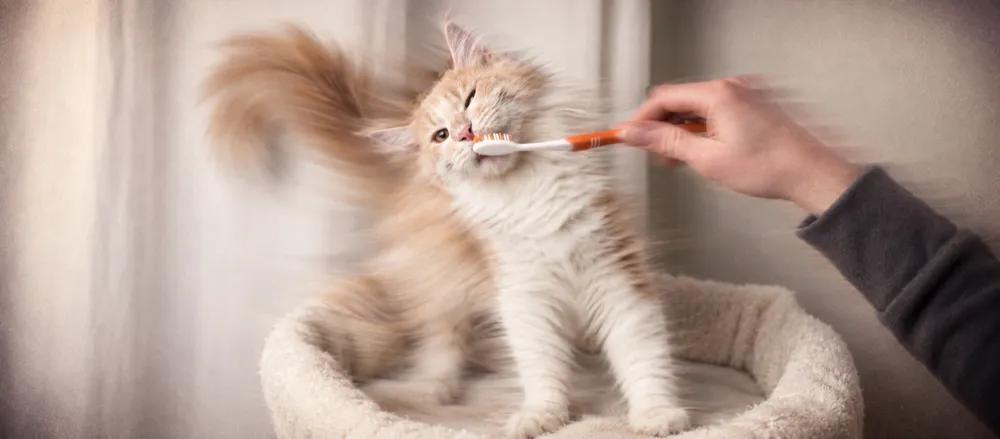
Ask the veterinary team to show you appropriate mouth care after examining the cat. Brushing may need a gradual introduction. Use only toothpaste or tooth gel designed for cats, since human products can be toxic to them. For kittens, veterinary guidance describes teaching mouth handling with a reward after the initial oral check. Respect the cat’s need for a break during the routine.
Professional dental assessment is different from cleaning the visible surfaces of teeth. A complete examination under anaesthesia includes checking each tooth, probing, assessing mobility and taking dental radiographs. Discuss what the vet recommends for your cat and what the proposed examination includes. A surface-cleaning service cannot provide the same information about the mouth.
Keep genetic risk separate from diagnosis
Heart-health discussions may also include hypertrophic cardiomyopathy, or HCM. A corrected 2024 genetic study describes particular HCM-associated variants in Ragdolls and Maine Coons. Such findings need breed-specific interpretation, and a vet should explain any screening result you have. Not every cat with the relevant mutations develops the disease.
HCM diagnosis uses echocardiography, which makes an image of the heart using sound waves. Other conditions, including high blood pressure and hyperthyroidism, can cause similar heart thickening and must be considered by the vet. The paper’s correction also cautions against one heart-wall measurement being treated as decisive for every cat.
For a new cat, obtain the previous vaccination, nutrition, parasite-control and grooming history and arrange a veterinary check as soon as possible after bringing them home. Bring any clinical or genetic reports you have, and ask what follow-up the vet recommends for this individual.
A negative result for the breed-associated MYBPC3 variants does not exclude HCM. Ragdolls and Maine Coons with negative results for those variants have still been reported with the disease. A genetic report concerns particular inherited risk, whereas echocardiography examines the heart. Ask which question an existing report answers and what its interpretation means for the cat’s care.
Questions about Ragdolls
How large is a Ragdoll cat?
Ragdolls are described as large, with a broad chest and a muscular body. That is a physical profile, not an individual weight target. Your cat’s feeding plan should reflect their body and muscle condition, age, activity and health.
How do Ragdolls and Maine Coons compare in size?
Both breeds have large physical profiles. The Ragdoll description includes a broad chest and muscular body; the Maine Coon is also described as large. These descriptions do not establish a universal size order between individual cats or a number that either cat should be fed towards.
Prepare for your next vet conversation
PetID links medical documents to your pet’s digital identity. Keep the reports you have available for the appointment and note the questions they raise, so your vet can discuss the actual findings with you.
Sources
Cat Fanciers’ Association: Maine Coon Cat physical breed profile.
Cat Fanciers’ Association: Ragdoll physical breed profile.
Salonen M et al. Breed differences of heritable behaviour traits in cats. Scientific Reports (2019).
Cornell Feline Health Center: Choosing and caring for your new cat.
Cornell Feline Health Center: Hypertrophic cardiomyopathy.
AAHA/AAFP 2021 Feline Life Stage Guidelines: Behavior and environmental needs.
AAHA/AAFP 2021 Feline Life Stage Guidelines: Nutrition and weight management.
Cornell Feline Health Center: Feline dental disease.