Labrador Retriever care starts with food suited to the dog's life stage, an individual activity plan and regular attention to body condition, ears and movement. The breed's short coat still needs care. A useful routine makes room for these checks without assuming that every Labrador needs the same meals or exercise.
Begin with the dog you have. A growing puppy, an adult whose weight is changing and an older dog who finds getting up difficult need different conversations with the veterinary team. The breed description can introduce those conversations, while your dog's health and response guide the details.
Understand the Labrador you are caring for
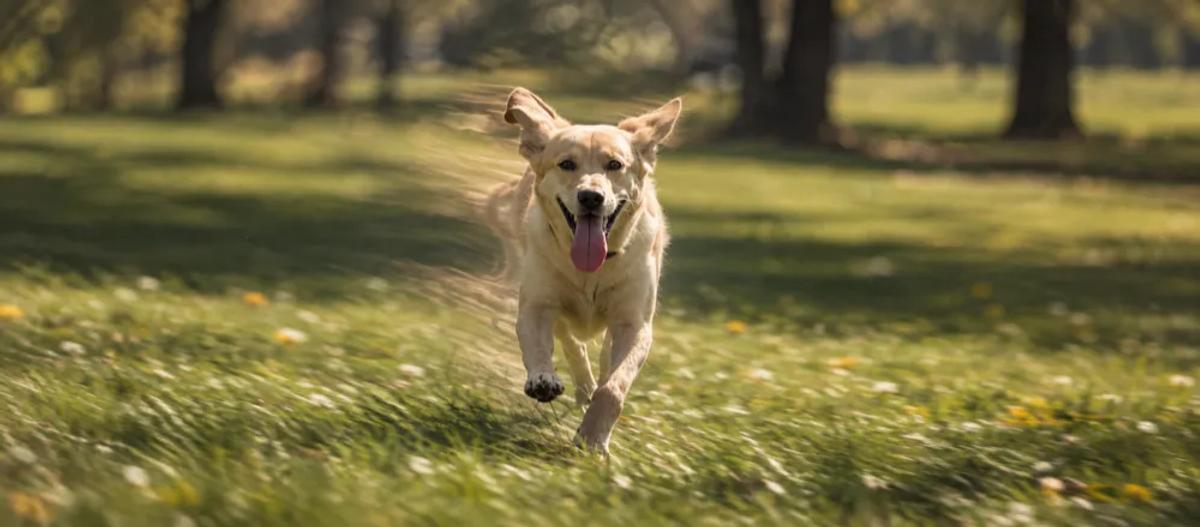
The Labrador is a working retriever with a short, dense coat and a soft undercoat. That physical description helps distinguish it from the Golden Retriever, whose coat includes feathering around areas such as the legs and tail. Neither description tells you the grooming routine that will suit an individual dog.
If you are still choosing between breeds, explore Golden Retriever coat and care alongside the Labrador routine. You can also compare large dog care needs before deciding who will provide outings, feeding and comfortable handling at home.
A breed standard describes an ideal, including an ideal temperament. It doesn't replace observing how your dog responds to people and everyday situations. Make space for rest as well as interaction, and consider whether your household can provide opportunities to explore, play and toilet comfortably. A familiar breed name cannot answer those practical questions for you.
Build a feeding plan around body condition
A UK study of Labradors in veterinary care during 2013 recorded overweight or obesity among common disorders. It describes that historical population, rather than the present-day frequency in India or what your own Labrador will experience. The useful action is to discuss body condition with your vet.
Ask for a demonstration. You need to know what the assessment means for your dog and how it will be reviewed. Comparing your Labrador with a neighbour's dog or a breed-standard weight leaves out that individual assessment.
Choose a complete and balanced food appropriate for age, health and activity. During growth, the diet must meet puppy needs until skeletal maturity; this can come later in some large breeds. Avoid excessive calcium intake and ask your vet when to change foods, rather than adding supplements or choosing a switch date from another puppy's routine.
Measure the agreed food amount and include treats in the same allowance. If two people practise training at different times, decide how each will use the day's rewards. This is a simple way to keep a measured meal from becoming only part of the feeding picture.
If weight loss is needed, discuss nutritional adequacy as well as portions. Reducing the usual food alone may not produce a suitable diet. Your vet can help choose a plan and review the response. Keep fresh water available, and bring changes in appetite or energy to their attention.
Choose activity your dog can manage
Give your Labrador opportunities for movement and exploration that suit their age and comfort. A walk can include unhurried sniffing. At home, a supervised food-search game or reward-based learning offers another kind of activity without requiring a long outing.
Watch the dog's response rather than working towards a fixed breed-wide number of minutes. Repeated stopping, reluctance to walk or difficulty rising gives you something to discuss before increasing exercise. The guide to an individual exercise plan explains how to think through the routine in more detail.
Weather can change that plan. Choose cooler conditions, offer shade and water, and avoid strenuous activity in heat or high humidity. The fact that you usually leave home at a particular time doesn't tell you whether today's conditions are suitable.
For a food search, start with something the dog can find while you supervise. Count the food within the agreed allowance. Enrichment should fit the feeding and mobility plan you already have, rather than becoming an extra meal or another physical target to complete.
Care for the coat and check the ears
Look through the short coat to the skin beneath it. Matting, missing fur, injuries or other changes deserve veterinary attention. Discuss the right care interval for your Labrador; unnecessary bathing can affect the skin and coat, so more washing is not automatically more useful care.
Introduce tools gradually. Let the dog investigate the brush, then pair a manageable part of handling with a reward. Pause if they pull away, freeze or show other signs of stress. A shorter, comfortable practice session leaves you room to build the skill with help if needed.
Ear checks are separate from ear cleaning. Redness, odour, discharge, head shaking or discomfort when you touch an ear can occur with different problems, and those signs do not identify the cause on their own. Contact your vet about a concern instead of assuming a routine clean will resolve it.
Healthy ears may not need cleaning, and cleaning too often can irritate them. If your vet recommends it, the guide to cleaning your dog’s ears covers preparation and when to stop. Pain during cleaning is a reason to stop and consult the vet, not to hold the dog more firmly and finish.

Watch for changes in mobility and comfort
The same historical UK Labrador study recorded degenerative joint disease and ear disease among common disorders. These findings help explain why movement and ear comfort deserve attention, but they cannot diagnose your dog or predict its future health.
Pay attention to ordinary transitions. Does your Labrador get up differently after resting? Has the gait changed? Is a familiar outing now met with reluctance? Stiffness, reduced activity and difficulty rising can be signs of a mobility problem that needs assessment.
Describe what you see without needing to name the condition. For example, if you notice a change after rest, tell the vet when it happens and whether you also see it during a walk. An observation is useful even when you are unsure how to interpret it.
After assessment, weight control and individually chosen low-impact activity may form part of a mobility plan. The appropriate choices depend on the dog. A routine suggested for someone else's Labrador should not become yours simply because both dogs share a breed.
Nuzzy's PetLife can hold weight logs and veterinary visit history, which can help you bring earlier information into the discussion.
If your dog seems unwell or shows an unexpected change in appetite, energy or behaviour, contact the veterinary team promptly. You don't need to wait for the next routine appointment to raise a new concern.
Frequently asked questions
How does a Labrador differ from a Golden Retriever?
A Labrador has a short, dense coat with a soft undercoat, while a Golden Retriever has a dense coat with feathering around parts of the body, including the legs and tail. Those differences give you concrete grooming questions to consider. They do not establish which individual dog will be easier to train or better suited to your household.
What can temperament tell me about an individual Labrador?
A breed standard describes an ideal temperament, so it is a starting description rather than a promise about your dog. Observe how your Labrador responds to everyday interactions and provide comfortable opportunities for rest and activity. If the dog is fearful, avoid forcing interaction and seek advice about the situations that cause concern.
Bring one useful question to the next visit
Choose the observation you most want help understanding, such as a weight change or difficulty getting up. Bring the relevant feeding details or earlier visit information with you. That gives the next conversation a clear starting point and helps you leave with a plan for your Labrador.
Sources
AAHA. Age-specific and breed-specific diets. Nutrition and Weight Management Guidelines, 2021.
Cornell University College of Veterinary Medicine. Osteoarthritis. Updated December 2025.
Aly Cohen. Grooming: cooperative care. Cornell Riney Canine Health Center, February 2026.
Cornell University College of Veterinary Medicine. Fearful dogs.
AAHA. Changing behaviors. Canine and Feline Behavior Management Guidelines, 2015.
WSAVA. Principles of Wellness. 2025 document.
Cornell University College of Veterinary Medicine. Summer heat safety tips for dogs.
Aly Cohen. Canine enrichment ideas. Cornell Riney Canine Health Center, July 2023.
American Kennel Club. Official standard for the Labrador Retriever. Approved 1994.
American Kennel Club. Official standard for the Golden Retriever. Approved 1981; reformatted 1990.