A Shih Tzu has a long, dense outer coat with a moderate undercoat. Caring for one means planning comfortable grooming, dental care, suitable food and veterinary reviews around the individual dog. Hair should allow clear vision and free movement. Health research can help you prepare questions, but it cannot predict what will happen to your Shih Tzu.
If you are considering the breed, ask to see the dog's current routine. A finished haircut tells you little about the handling, time and help needed to maintain it.
Understand the coat before planning care
The breed standard describes a long outer coat that is dense rather than curly, with some wave permitted. That description is about appearance. The practical requirement is that coat length should not interfere with movement and hair should not obstruct sight.
Discuss those points with the person who will groom your dog. Ask them to demonstrate the tools and explain what you should do between appointments. Be specific about your experience: if you have never brushed a long coat, say so. You need instructions you can follow at home, including when to stop and ask for help.
For households still choosing a dog, compare small dog breeds by their care commitments. Keep the dog's existing health and handling history beside the breed description. That gives you a more useful starting point than choosing a look and trying to build the routine afterwards.
Use health research to prepare useful questions
A study published in 2024 examined Shih Tzus under UK veterinary care during 2016. Researchers extracted disorder information for a random subset of 2,423 dogs. The most common individual disorders were periodontal disease, recorded in 9.5%, anal-sac impaction in 7.4%, and ear disorders in 5.5%.
The study also grouped diagnoses into broader categories. Skin, dental and eye disorders were the most common of those groups. A broad group is not the same measure as one individual diagnosis, so the figures should not be mixed or added together.
These are findings from veterinary records in one country and study period. They are not an estimate for Shih Tzus living in India today, and they do not mean your dog has any of the conditions. They do make dental, skin, eye and ear care sensible subjects to raise when reviewing the dog's history with a vet.
Bring earlier reports if you have them. Ask which findings need follow-up for this dog and how to recognise a change that warrants a call. If an ear concern comes up, our guide to how ear problems are assessed explains the assessment process. A breed study cannot tell you which treatment an individual ear needs.
Build a coat-care routine you can keep up
Check the coat and skin regularly for changes such as matting, fur loss or injuries, and have abnormalities assessed by a veterinarian. Discuss brushing, bathing and trimming intervals for your dog. The coat description does not justify a single timetable for every Shih Tzu.
Start handling practice when the dog is relaxed. Allow them to investigate grooming tools, and pair introductions with rewards before trying a full session. Gentle handling of paws and ears can be practised in small steps. If your dog pulls away or freezes, pause. The next attempt can be smaller.
Tell the groomer which parts your dog finds difficult. If grooming is stressful, consult your vet or a suitably qualified professional for guidance.
Our grooming preparation guide covers the general process. If you are comparing long-coated breeds, Pomeranian coat and care describes a different coat structure. Use that comparison to frame questions, rather than assuming the same tools or intervals suit both dogs.
A workable routine should name the person responsible and leave room for practice. Booked appointments and home care need to fit together. Ask what the groomer expects you to maintain between visits before agreeing to a style you may struggle to manage.
Make dental care part of the day
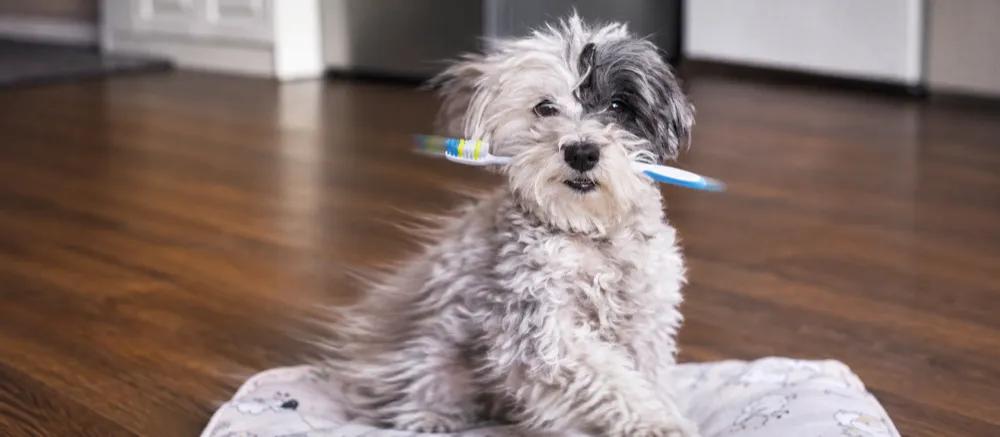
The research finding on periodontal disease makes mouth care a useful priority to discuss with your vet. General dental guidance supports daily toothbrushing, introduced gradually with equipment suitable for the dog. Your veterinarian can recommend a brush and toothpaste and assess any concerns before you begin.
Start with gentle handling around the face. When the dog is comfortable, progress to lifting the upper lip gently and reward their acceptance. Introduce the brush in small steps; touching one tooth can be an early stage before working along the gumline. Let the dog's comfort determine the pace.
Do not force the session to meet a daily target. If your Shih Tzu is uncomfortable, stop and ask for advice where needed. Learning the routine takes time, and an uncomfortable mouth needs attention rather than more determined brushing.
The guide to introducing toothbrushing explains the progression in more detail. Choose a repeatable time and agree who will do it. If another family member takes over, show them the stage the dog is comfortable with rather than asking them to start the whole routine at once.
Plan feeding with the right information
Choose a complete diet suited to the dog's life stage and individual needs. Keep the food label or product details available for a feeding discussion. The useful information includes whether it is intended as a complete diet, which life stage it suits and its calorie content where available.
Food amounts should be tailored to ideal body condition, age, size and lifestyle. Discuss treats and anything else the dog is fed as part of that review. A portion copied from another Shih Tzu's routine is not an assessment of your dog.
Before a visit, write down what is being fed and who gives it. If the information is uncertain, say so. Ask the vet how the plan should be monitored and reviewed as needs change.
Keep previous visit information accessible so you can follow the agreed plan. PetLife includes weight logs and vet-visit history; those records can help you prepare for a clinic conversation. Confirm which details the clinic wants you to bring, including any earlier reports.
Frequently asked questions
What health problems should Shih Tzu pet parents discuss with a vet?
The UK study using 2016 records found periodontal disease, anal-sac impaction and ear disorders among the most common individual diagnoses. Skin, dental and eye disorders featured in the broader categories. Use these findings to prepare questions, alongside your dog's own history and current concerns. The results do not justify diagnosing a problem from breed alone or treating a dog who has not been assessed.
How should I interpret Shih Tzu lifespan figures?
The study reported a median recorded age at death of 12.7 years. That describes the deaths recorded in its study population; it is not a promised lifespan for a puppy or a prediction for your dog. Keep the country, study period and type of measure attached when comparing numbers. An individual wellness conversation should focus on the dog's current needs and care plan.
Find grooming support that fits your dog
Use PetMap to explore grooming options, then contact the groomer about your Shih Tzu's coat and handling needs. Ask how they provide pauses, what you should practise at home and when a concern needs veterinary attention. Bring those answers into the routine you can realistically maintain.
Sources
- Dale FC et al. Demography, common disorders and mortality of Shih Tzu dogs under primary veterinary care in the UK. Canine Medicine and Genetics (2024).
- Fédération Cynologique Internationale. Shih Tzu breed standard, No. 208 (2017). Coat description.
- WSAVA Global Dental Committee. Toothbrushing toolkit.
- WSAVA Global Nutrition Committee. Guidelines on selecting pet foods (2021).
- Cohen A. Grooming: cooperative care. Cornell Riney Canine Health Center (5 February 2026).
- WSAVA. Principles of Wellness.