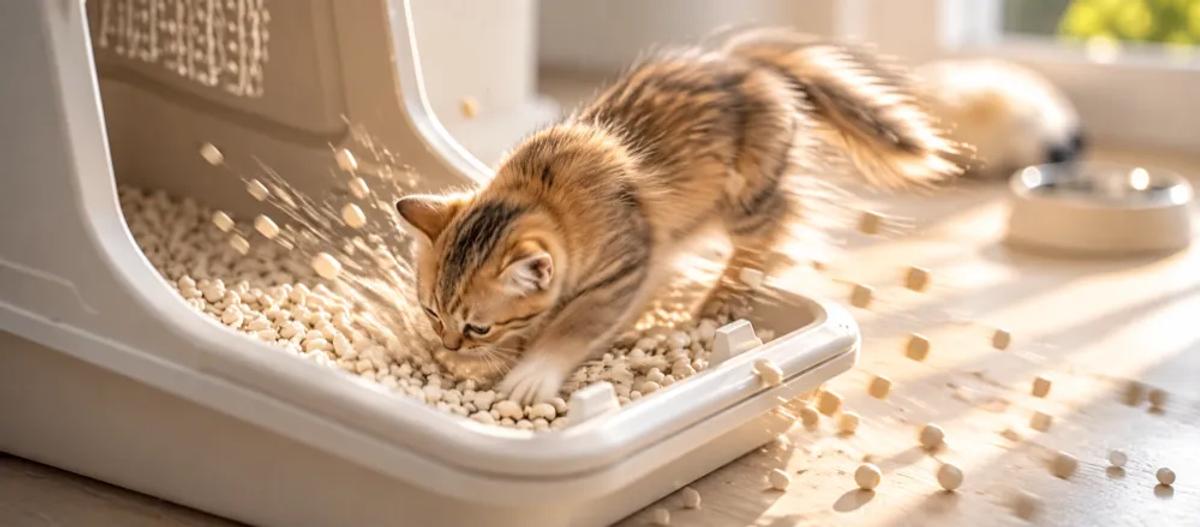
To help a kitten use a litter box, provide one it can enter easily in a quiet, accessible place, and pay attention to the litter and box it accepts. Keep the approach gentle. If the kitten soils outside the box, seek veterinary advice promptly and review the setup; punishment has no place in the response.
This guide is for preparing a kitten’s litter setup as it joins your household. Ask your vet about the needs of the individual kitten, including any developmental concerns. Have the setup ready before the kitten arrives.
Prepare the space before arrival
Choose the litter location while you are preparing the home. Keep it separate from food, water and resting areas, and check that the kitten can reach it. Your cat’s everyday needs include access to each of those resources; arranging them is part of the preparation for arrival.
Walk through the space the kitten will use. Look at the route from its resting place to the litter box, then at where the food and water will sit. These activities need their own locations. A neat row of supplies along one wall may suit the room’s layout, but the kitten also needs separation between its resources.
Discuss the planned litter arrangement with your vet. The useful questions concern the kitten you are bringing home: whether the box is accessible and how to adapt the setup to its needs. The preparation can happen before you have the kitten in front of you, with adjustments made as you learn what it accepts.
For the other parts of arrival, the guide to feeding a kitten already on solid food covers the food decision. If there is a resident cat, read about introducing the kitten to another cat as a separate part of the preparation. The feeding and introduction guides address those tasks in detail.
Make the box easy to enter
Look at the edge from the kitten’s height. It should be low enough for easy entry and exit. An awkward climb can make an otherwise convenient location unsuitable for the kitten, so check the actual access as well as where the box fits in the room.
Choose a quiet location that is convenient for the cat to reach. In a home with other cats, an escape route matters too. A box in a confined corner may need a different arrangement if another cat can block the approach or the way out.
Access needs checking throughout the space the kitten uses. Think about whether a closed door could cut off the route to the box. If you have litter options in different places, each should remain accessible. Review the arrangement with the household so everyone understands which routes need to stay open.
Keep the focus on easy entry, quiet placement and usable routes. Your vet can help you assess whether the particular box and location suit the kitten.

Find a litter your kitten accepts
Cats can have individual preferences for litter and box design. Watch what your kitten accepts instead of assuming that one material will suit every cat. The size of the box and whether it is covered can also matter to the cat using it.
When offering different litters, use separate boxes so the kitten has a choice. Notice which option it uses. This is a way to learn about its preferences without choosing a universal litter type on its behalf.
If the current box is being rejected, include the material and design in your review. Describe what you have offered when you speak to your vet. Keep the question specific: whether the kitten accepts this litter in this box and whether another option is more suitable.
A different purchase does not automatically answer why a box is being avoided. Preferences are part of the assessment, alongside whether the kitten can reach and use the setup.
Support learning gently
Cats learn at their own pace. When teaching behaviours, use rewards the individual kitten likes and keep sessions brief enough to end before it loses interest. Food can be a reward, but play or attention may also be valued. Observe the kitten’s preferences.
Let the kitten choose contact and move away when it wants to. Do not force handling to complete a lesson. Familiarise yourself with signs your cat needs space so that the way you interact supports the kitten’s comfort.
Never reprimand a kitten for toileting in an unwanted place or take it to the litter box as punishment. An accident calls for a calm review of what happened and veterinary advice. It does not tell you that the kitten is being deliberately difficult.
If your kitten soils outside the box
Contact your vet promptly when the kitten soils outside the litter box. Medical conditions can be involved, and the vet needs to assess the individual kitten. You do not need to rule out every possible problem with the litter arrangement before seeking help.
Review the box’s cleanliness and whether it remains easy to reach. Litter boxes need regular cleaning and scooping. If another cat is present, consider whether access is being blocked. Describe those observations when you discuss the problem.
Keep your account practical: which box was available, where the soiling happened and what the kitten could reach. Avoid assigning blame. The veterinary assessment and the home setup can be considered together.
Tell the vet about other changes in behaviour as well. New hiding, reduced jumping or altered routines may help them understand the wider picture. Follow the care advice for your kitten.
Questions about kitten litter training
How long does it take to litter train a kitten?
Cats learn at individual rates. Keep the litter box easy to reach and pay attention to what your kitten accepts. If it soils outside the box, seek veterinary advice promptly; don’t wait for a training deadline.
When should I prepare a litter box for a new kitten?
Have an accessible litter setup ready before the kitten arrives. Choose a box it can enter easily and discuss the individual kitten’s needs with your vet.
Keep the care history
Keep the kitten’s vet-visit history in Nuzzy PetLife as its care plan develops. The family can refer to previous visits when preparing for the next appointment.
Sources
- AAFP task force. 2024 AAFP intercat tension guidelines: recognition, prevention and management. Journal of Feline Medicine and Surgery (2024).
- Ellis SLH et al. AAFP and ISFM Feline Environmental Needs Guidelines. Journal of Feline Medicine and Surgery (2013).
- Quimby J et al. 2021 AAHA/AAFP Feline Life Stage Guidelines. AAHA guideline publication (2021).